Facebook
 Linked In
 Twitter
 YouTube

Priya Singh
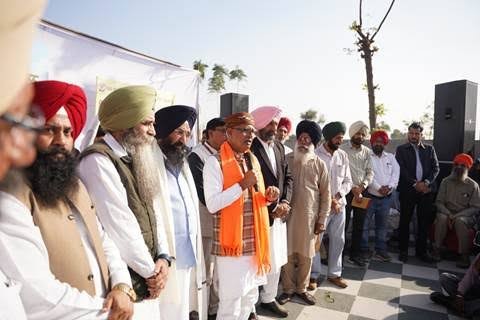
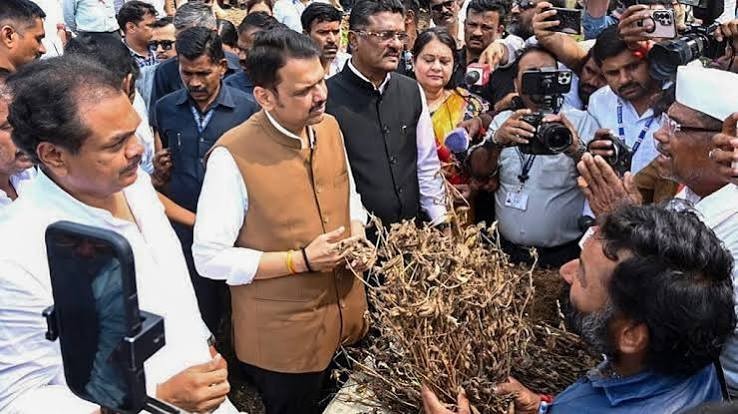
Punjab: Union Agriculture and Farmers Welfare Minister Shivraj Singh Chouhan on Wednesday visited Booh Haveliyaan village in Punjab's Tarn Taran district, where farmers and panchayats have been practising farming without stubble burning for the past six years. During a Kisan Chaupal, the Minister interacted with farmers, reviewed their concerns and highlighted the importance of soil health, crop residue management and agricultural diversification.
Praising the village's efforts, Chouhan said its approach to managing crop residue could offer a model for other farming communities. Farmers in the village have adopted practices such as the use of Happy Seeder machines and direct seeding to manage crop residues without burning them.
The Minister said Punjab's farmers had played a historic role in strengthening India's food security through the Green Revolution. However, he cautioned that declining soil health, excessive use of chemical fertilisers and pesticides, and stubble burning posed challenges to the long-term sustainability of agriculture.
He emphasised the need to protect soil fertility and preserve beneficial organisms, including earthworms and friendly insects, for future generations.
During the interaction, farmers raised concerns about practical difficulties in stubble management, subsidies for baler machines and the quality of agricultural machinery supplied under government support programmes.
Responding to their concerns, Chouhan said the Centre was providing approximately ₹286 crore to Punjab this year for Crop Residue Management (CRM). He said that while the Centre provides funds, the state government is responsible for procuring machinery and ensuring quality checks.
He urged the state government to ensure that farmers receive reliable equipment and have access to proper repair facilities in case of machinery breakdowns.
The Minister also assured farmers that their suggestions would be taken up for further discussion and said progressive farmers would be invited to Delhi to discuss the issues in detail.
Chouhan expressed concern over the non-implementation of the Pradhan Mantri Fasal Bima Yojana (PMFBY) in Punjab. He said the scheme was important for protecting farmers against crop losses caused by natural calamities and other notified risks.
Referring to the recent floods in the state, he said he had written to the Punjab Chief Minister, urging the state government to implement the scheme so that farmers could receive insurance support against such losses.
The Minister also called for a broader approach to making agriculture economically viable. He stressed the need to increase productivity, reduce cultivation costs and promote integrated farming through crop diversification, animal husbandry, fisheries and poultry.
Speaking to the media after the interaction, Chouhan reiterated the Centre's commitment to procurement of paddy and wheat at the Minimum Support Price (MSP). He also referred to the government's procurement commitments for pulses, including tur, masoor and urad, as well as cotton.
The visit brought attention to two important challenges facing Punjab agriculture: managing crop residue without burning and improving farm incomes while maintaining soil health.
The experience of Booh Haveliyaan, where farmers have reportedly avoided stubble burning for six consecutive years, highlights the role of village-level participation and access to appropriate machinery in promoting more sustainable farming practices.




.png)