Facebook
 Linked In
 Twitter
 YouTube

IndiAgri Bureau
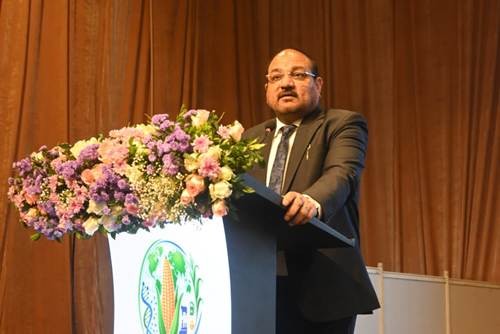
Hyderabad: India’s maize production has reached approximately 55 million tonnes, and the country is targeting 75 million tonnes over the next decade, with a stronger focus on productivity, improved breeding, quality seeds and farmer-centric research.
The targets were outlined at the first International Maize Conference 2026, which began in Hyderabad on November 2. Held under the theme “Maize Revolution for Food, Feed, Fodder, Fuel and Sustainability in the Changing World”, the three-day conference brings together scientists, policymakers, research institutions and industry representatives to discuss the future of maize production and its expanding role in agriculture and allied sectors.
Dr M. L. Jat, Secretary, Department of Agricultural Research and Education (DARE), and Director General of the Indian Council of Agricultural Research (ICAR), called for a 1.5-fold increase in productivity over the next decade, supported by technological innovation, improved crop management and more efficient resource use.
He also emphasised that agricultural research must deliver measurable gains in farm profitability and rural livelihoods, rather than focusing solely on production growth.
A key focus of the conference was the need to address yield gaps through improved agronomic practices and a more integrated approach to maize production.
Dr Jat advocated a systems-science approach to identify constraints affecting productivity and improve the targeting of maize across seasons and agroecological zones. He also cautioned against expanding maize cultivation at the expense of other important crops, particularly oilseeds and pulses.
Access to affordable, quality seed emerged as another priority. Dr Jat called for a stronger seed system, with particular attention to the availability of public-sector hybrids to farmers.
The discussions highlighted the need to combine improved genetics with appropriate crop management, efficient resource utilisation and mechanisation to realise maize’s production potential.
Dr D. K. Yadav, Deputy Director General (Crop Science) at ICAR, described maize as an important crop for food, nutrition and energy security.
Highlighting progress in maize research over the past five years, he noted that 329 maize hybrids had been developed during the period. He called for strengthening the All India Coordinated Research Project on Maize (AICRP on Maize) to accelerate crop improvement and address emerging production challenges.
He emphasised the need to develop high-yielding hybrids with improved nutritional quality and greater resistance to biotic and abiotic stresses. Greater input-use efficiency, mechanisation, capacity building and stronger public-sector hybrid seed production were also identified as important areas for future investment.
Collaboration between research institutions, agricultural universities and industry will be crucial to developing improved varieties and expanding maize’s potential as a feedstock for ethanol production.
Eminent maize scientist Padma Shri Dr S. Vasal, associated with the International Maize and Wheat Improvement Center (CIMMYT), advocated simple and cost-effective breeding approaches to speed up the development of improved varieties and hybrids suited to farmers’ requirements.
Padma Bhushan Dr R. S. Paroda, former Secretary, DARE, and former Director General of ICAR, called for research priorities to remain aligned with the changing needs of agriculture and allied sectors.
He highlighted the importance of advanced breeding techniques, systematic conservation and utilisation of genetic resources, stronger maize value chains and effective aflatoxin management. Controlling aflatoxin contamination is particularly important for maintaining maize safety and quality for food and animal feed.
The discussions reinforced the need to connect crop improvement with quality assurance, processing and market development so that productivity gains can translate into greater value across the supply chain.
Maize is increasingly important beyond food production, with applications in animal feed, fodder and industrial uses, including ethanol. Developing a stronger maize value chain will require improvements in production, seed availability, processing and quality management.
The conference also highlighted the need for closer coordination between public research institutions and private industry to address bottlenecks in production and improve the commercial potential of the crop.
Dr H. S. Jat, President of the Maize Technologists Association of India (MTAI), stressed the strategic importance of maize in India’s agricultural transformation and called for stronger collaboration among researchers, agricultural universities, policymakers and industry.
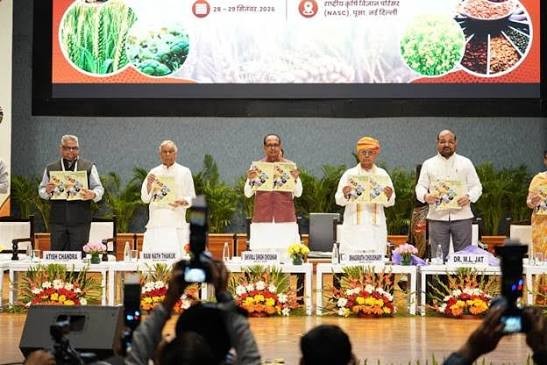
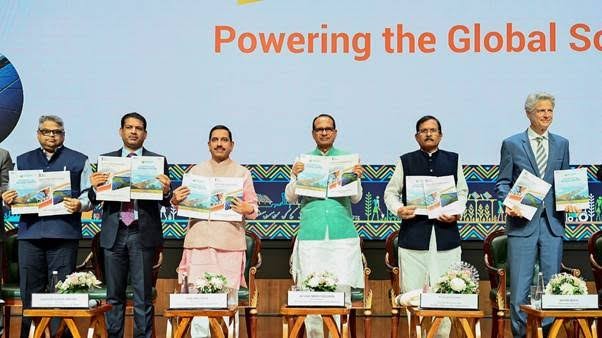
Scientific publications were released and awards presented to researchers for their contributions to maize research and development during the inaugural programme.
The International Maize Conference 2026, being held from November 2 to 4 in Hyderabad, aims to provide a platform for national and international experts to identify priorities for research, breeding, seed systems and value-chain development.
With production at approximately 55 million tonnes, the target of 75 million tonnes over the next decade will depend on how effectively India can close existing yield gaps, improve access to quality seed and strengthen crop management practices.
Equally important will be ensuring that higher production translates into better returns for farmers without undermining the cultivation of other strategically important crops.
The conference places farmer profitability, climate resilience, nutritional quality and sustainable resource use at the centre of discussions on the future of India's maize sector.

.jpeg)

.png)