Facebook
 Linked In
 Twitter
 YouTube

Priya Singh
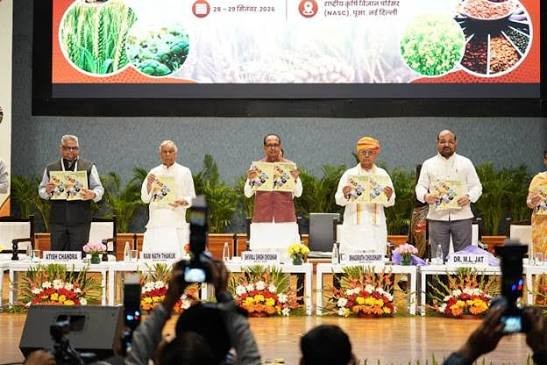
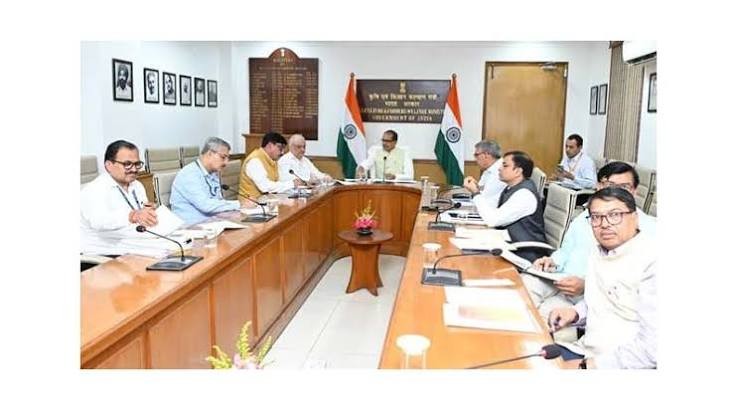
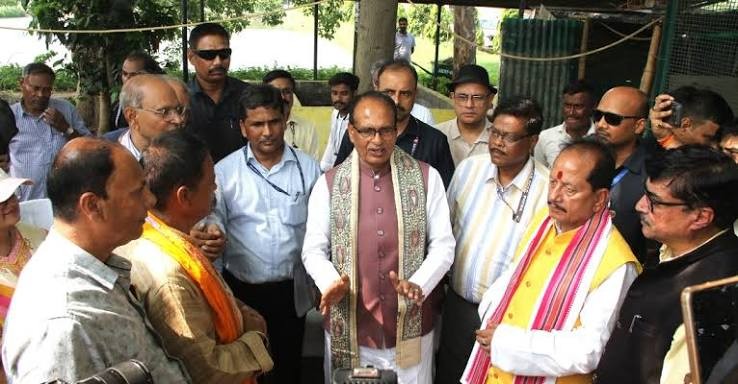
New Delhi: The Centre has asked states and Union Territories to accelerate implementation of the Digital Agriculture Mission and Pulses Self-Reliance Mission, with Union Agriculture and Farmers Welfare Minister Shivraj Singh Chouhan stressing that government schemes must translate into actual benefits for farmers.
Addressing a national agriculture conference in New Delhi, Chouhan called for complete coverage under both missions and urged states to work within fixed timelines.
The minister said the success of these programmes should be measured by their impact in farmers' fields and their access to benefits, rather than only by progress recorded in official reports.
A key component of the Digital Agriculture Mission is the creation of Farmer IDs, which are intended to help connect farmers with government schemes and enable more transparent delivery of benefits.
According to data presented at the conference, 10.41 crore Farmer IDs have been generated across 26 states and Union Territories. This covers around 84.68% of PM-KISAN beneficiaries and approximately 77% of operational landholdings.
Chouhan urged states to speed up the remaining work and ensure that farmers are able to access the digital services linked to their records.
The Centre has also released funds to support Farmer ID generation and camps in states including Maharashtra and Chhattisgarh.
The government is also pushing for wider digitisation of land records and crop surveys as part of the digital agriculture framework.
Geo-referencing of village maps has been completed for 5.9 lakh villages, representing 93.05% of the identified villages.
The coverage of the Digital Crop Survey has also expanded significantly. The survey was conducted across 290 districts in 2024-25 and increased to 650 districts by the Rabi 2025-26 season.
The government is targeting 692 districts during Kharif 2026-27.
The area covered under the digital crop survey is expected to rise to 13.4 crore hectares during the coming kharif season, compared with 9.18 crore hectares in 2025-26.
The expansion is aimed at creating more reliable crop and farm-level data, which can support better planning, monitoring and delivery of agricultural services.
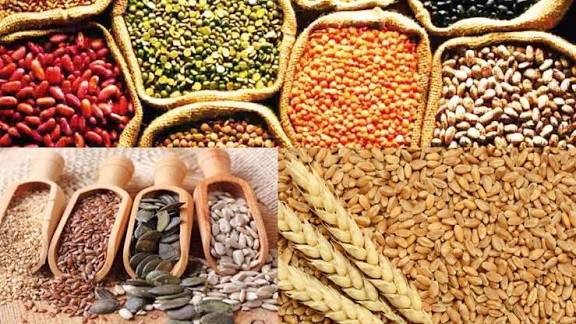
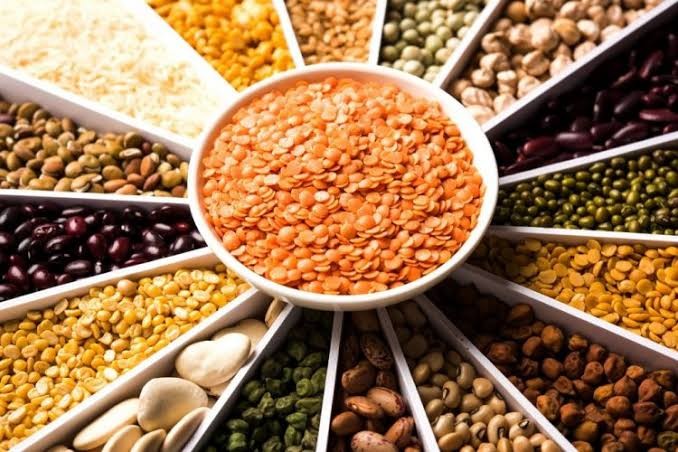
Alongside digital agriculture, the Centre is focusing on increasing domestic pulses production and reducing India's dependence on imports.
Government data showed that pulses production increased to 274.09 lakh tonnes in 2025-26, compared with 256.83 lakh tonnes in 2024-25.
At the same time, pulses imports declined from 72.56 lakh tonnes to 59.64 lakh tonnes during the period.
The area under pulses also increased from 277.20 lakh hectares to 286.46 lakh hectares, while average productivity improved from 926 kg per hectare to 957 kg per hectare.
The Centre wants states to replicate regions where higher acreage and production have been achieved and expand domestic pulses cultivation across the country.
The government has said that increasing production alone will not be enough to make India self-reliant in pulses.
Farmers also need access to processing facilities, storage infrastructure and reliable markets to ensure higher production translates into better returns.
Under the Pulses Self-Reliance Mission, the government has set a target of establishing 528 processing units across states by 2026-27.
The Centre has asked officials to speed up the development of processing units, cold storage and market linkages, including through public-private partnerships.
Timely availability of farm inputs and payments to farmers has also been emphasised to reduce losses during sowing, harvesting and marketing.
The Centre's latest push highlights two connected priorities for Indian agriculture: better use of digital data and stronger domestic production of essential crops.
Digital land records, Farmer IDs and crop surveys can improve the targeting and transparency of agricultural schemes. At the same time, investments in processing, storage and markets will be critical if the country wants higher pulses production to translate into greater farmer income and lower import dependence.
For both missions, however, the biggest challenge will be implementation at the state and field level. The Centre has now put the responsibility on states to close the remaining gaps and ensure that the programmes deliver measurable outcomes for farmers.