Facebook
 Linked In
 Twitter
 YouTube

Priya Singh
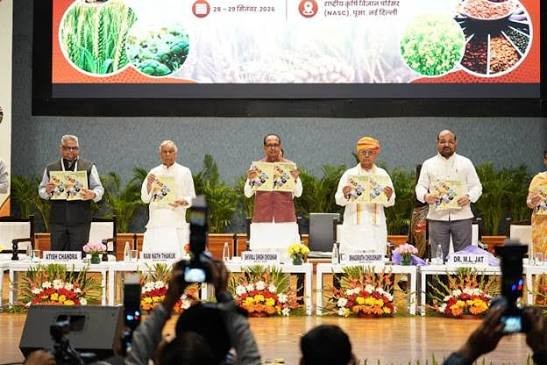
New Delhi: As the Rabi sowing season approaches, the Centre has asked States to move away from conventional crop planning and adopt a more data-driven approach based on water availability, soil moisture, climate conditions and market demand.
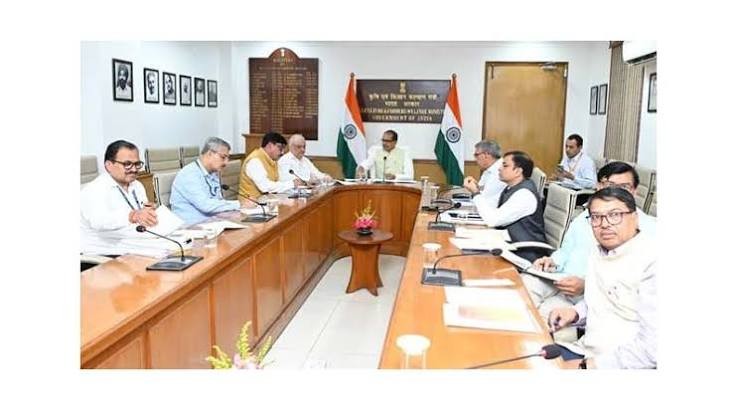
Addressing the two-day National Agriculture Conference - Rabi Campaign 2026 in New Delhi, Union Agriculture and Farmers’ Welfare Minister Shivraj Singh Chouhan stressed that timely availability of quality seeds, fertilisers and irrigation, along with assured procurement, will be critical to protecting farm incomes during the upcoming season.
A major focus of the meeting was water- based crop planning. States and districts have been asked to assess available irrigation water before finalising crop plans. In water-stressed and rainfed regions, the government is encouraging relatively less water-intensive crops, particularly pulses and oilseeds.
The Centre has also raised concerns over drought conditions in Maharashtra and Karnataka. Central teams are scheduled to assess the ground situation in Karnataka on October 3, while a separate team will visit Maharashtra. The government has called for separate strategies for rainfed and irrigated areas in Maharashtra, Karnataka, Telangana and Andhra Pradesh.
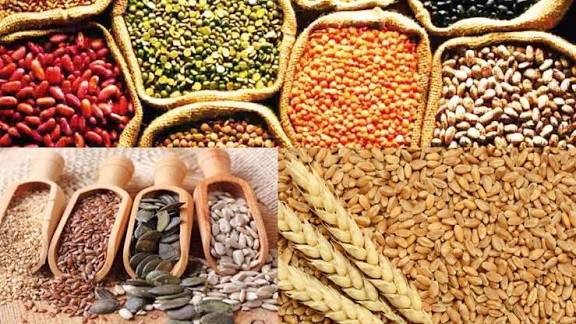
With India seeking greater self-reliance in pulses and edible oils, States have been asked to expand cultivation of crops such as chana, masoor and mustard, particularly in rice-fallow areas.
Chouhan has asked States to finalise their Rabi plans by September 29, including the area proposed under pulses and the crops to be promoted. The government has also stressed that higher production must be backed by assured markets and timely procurement.
Where States are unable to undertake procurement in time, central agencies NAFED and NCCF will procure directly from farmers. The Centre has also approved large-scale procurement proposals for pulses and oilseeds under the Price Support Scheme (PSS).
Quality seed has emerged as another major priority for Rabi 2026. The Agriculture Minister asked States to identify suitable varieties for different agro-climatic regions and prepare seed demand, procurement and distribution plans well before sowing begins.
The government has also flagged instances where improved seed varieties reach farmers after the sowing window, reducing their value to growers. States have been asked to work with ICAR scientists and agricultural institutions to improve variety selection, distribution and farmer awareness.
The government is also seeking wider adoption of balanced fertiliser application under the ‘Khet Bachao Abhiyan’. Chouhan cautioned against excessive fertiliser use, pointing to its impact on cultivation costs and soil health.
The Centre is spending around Rs 2 lakh crore on fertiliser subsidy, while farmers continue to receive subsidised urea at Rs 266 per bag and DAP at Rs 1,350 per bag. Pilot initiatives using Farmer ID are also being explored to improve fertiliser distribution and prevent diversion and black marketing.
The Minister called for weekly monitoring of sowing, germination, crop conditions, pest and disease outbreaks and market prices so that emerging problems can be addressed quickly.
He also pushed for wider coverage of Farmer ID, AgriStack and Kisan Credit Cards (KCC). Around 9.54 crore farmer families are covered under PM-KISAN, but KCC coverage remains inadequate in some regions, particularly among small and marginal farmers.
ICAR Director General Dr. Mangi Lal Jat identified crop diversification, climate-resilient agriculture, digital agriculture and risk management as key priorities for Rabi 2026. He also highlighted plans for large-scale demonstrations of green ammonia across 10,000 acres in 37 districts of six States.
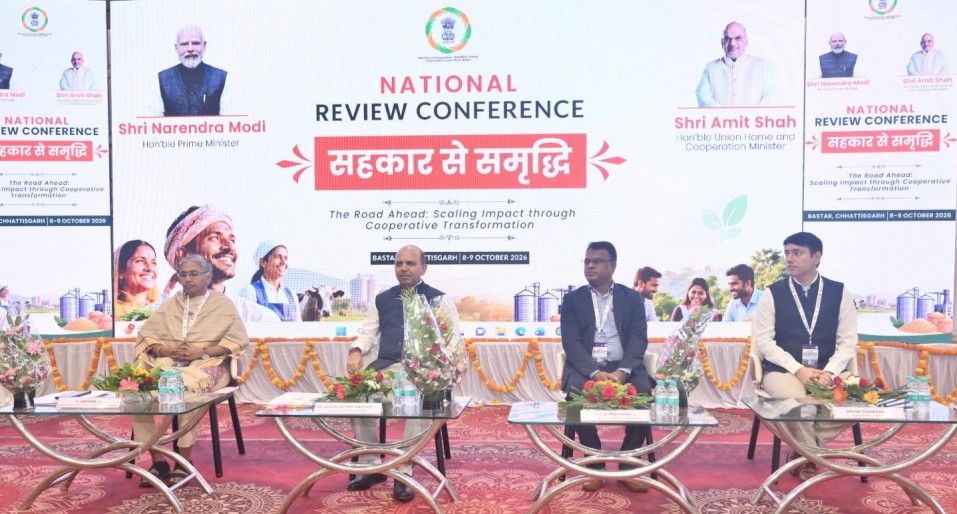
The two-day conference is bringing together officials from the Centre and States, ICAR scientists, agricultural universities and other stakeholders to develop an action plan for Rabi 2026. Discussions are covering crop diversification, climate resilience, digital agriculture, infrastructure, financing, fertiliser availability, procurement and market reforms.
For Rabi 2026, the message from the Centre is clear: crop planning will need to start with the resources available on the ground, while production targets must be backed by timely inputs, technology and a reliable market for farmers.



.png)