Facebook
 Linked In
 Twitter
 YouTube

Priya Singh
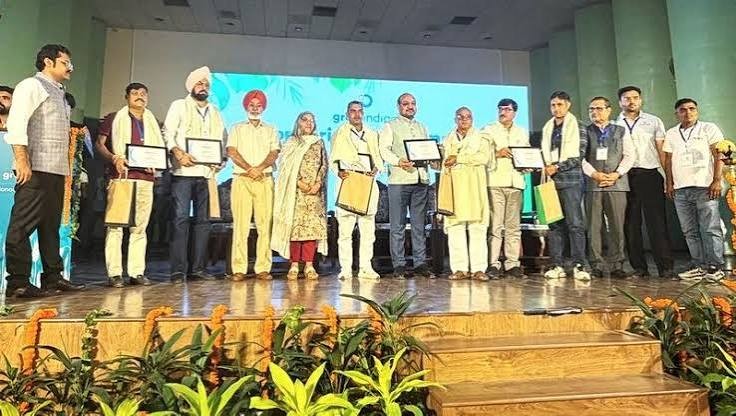
New Delhi: India’s agricultural carbon market is beginning to reach the farm level, with more than 2,500 farmers in Punjab and Haryana set to receive digital payments for adopting regenerative farming practices.
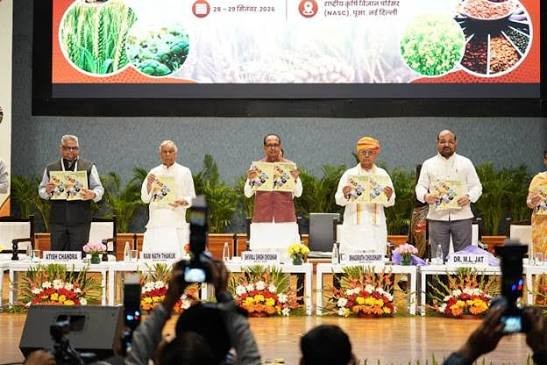
The first payments were initiated at Punjab Agricultural University (PAU), Ludhiana, where Dr M. L. Jat, Secretary, Department of Agricultural Research and Education (DARE) and Director General, Indian Council of Agricultural Research (ICAR), initiated Direct Benefit Transfer (DBT) to 2,550 farmers.
The payments are linked to ‘Aadi’, a Grow Indigo farmer carbon programme launched in 2019 with technical guidance from ICAR. Farmers enrolled in the programme adopted practices including Direct Seeded Rice (DSR), reduced tillage and crop residue management between 2019 and 2022.
What makes the initiative significant is the way environmental outcomes have been connected with farm income. Changes in soil carbon and greenhouse gas (GHG) emissions were measured and independently verified before carbon credits were issued.
The programme currently covers more than two million acres and over 100,000 farmers across seven States. Agricultural carbon credits have been issued under the Verra VM0042 methodology.
For farmers, regenerative agriculture is increasingly being discussed not only in terms of soil health and resource conservation, but also in terms of whether these practices can create an additional income stream.
Under the Aadi programme, participating farmers receive a share of the carbon credits generated from their fields. The first issuance covered around 30,000 acres and more than 50,000 carbon credits, with participating farmers receiving approximately Rs 3,000 to Rs 15,000.
Grow Indigo released the payments digitally from its own funds before the credits were fully sold. Farmers were given the option of an assured upfront payment or 75% of the net carbon revenue after the credits were sold.
Farmers who joined the programme after 2022 will be covered under subsequent monitoring cycles and are expected to receive payments as their carbon credits are issued.
The carbon payments are linked to farming practices that can also address some of the major resource challenges in the rice-wheat systems of Punjab and Haryana.
Direct Seeded Rice can reduce irrigation requirements compared with conventional transplanting, while better crop-residue management can reduce the need for stubble burning.
For fields enrolled between 2019 and 2022, the programme estimates savings of 45 billion litres of water and more than two lakh tonnes of crop residue kept out of fires. It estimates that this helped avoid around 1,000 tonnes of PM2.5 emissions.
The development comes against the backdrop of a significant reduction in farm-fire incidents in Punjab. Government data cited in the announcement shows 5,114 farm-fire incidents during the 2025 paddy harvesting season, a 93% decline from 2021 and a 90% decline from 2022.
Carbon farming depends on more than simply adopting a particular practice. The environmental outcome has to be measured, assessed and verified.
ICAR institutions have contributed to the scientific framework supporting the programme, including greenhouse-gas accounting, crop-simulation modelling, soil-sampling protocols, device validation, field-team training and satellite and remote-sensing approaches.
ICAR–Indian Agricultural Research Institute (IARI), New Delhi, has contributed to these processes, while Grow Indigo is also working with ICAR–Agricultural Technology Application Research Institute (ATARI), Zone 1, to promote regenerative agriculture.
Dr M. L. Jat said the initiative demonstrates how climate-smart farming practices supported by scientific assessment and verification can create additional income opportunities for smallholder farmers while contributing to water conservation and improved air quality.
Dr Usha Barwale Zehr, Executive Director, Grow Indigo, described the payment as the first instance in India of farmers being paid for carbon stored in their soil.
The development is part of a broader push towards farming systems that combine productivity with resource conservation. Practices such as residue retention, minimum soil disturbance, DSR, diversified cropping, improved soil biology and efficient water use are increasingly being explored as components of climate-resilient agriculture.
The Ransinh Kalan experience in Moga also offers a field-level example. The village has maintained a 100% residue-burning-free status across 1,310 acres for six consecutive years, highlighting how sustained community-level residue management can contribute to reducing farm fires.
The carbon farming discussion is also gaining an international dimension. At the 16th BRICS Agriculture Ministers’ Meeting held in Indore in June 2026, countries agreed to establish a BRICS Network of Centres of Excellence on Agroecology and Regenerative Agriculture for Climate Resilience and Productivity. The network is initially being coordinated by ICAR–Indian Institute of Farming System Research (IIFSR), Modipuram.
For Indian agriculture, the significance of the Ludhiana payments goes beyond the first transfer of money. It offers an early example of how a farmer's adoption of sustainable practices can potentially be measured as an environmental outcome and linked to an economic return.
The bigger question now is how such models can be scaled while ensuring reliable measurement, transparent carbon-credit systems and meaningful returns for farmers.