Facebook
 Linked In
 Twitter
 YouTube

IndiAgri Bureau
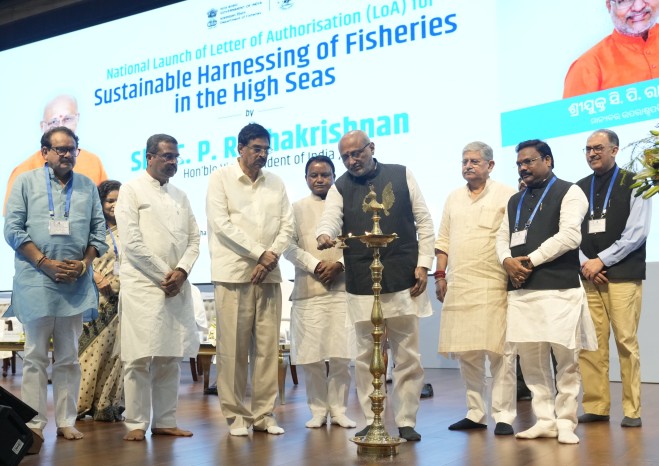
Bhubaneswar: India has taken a major step towards expanding its marine fisheries sector with the launch of a national programme for issuing Letters of Authorisation (LoAs) for sustainable fishing in the High Seas. The initiative, unveiled by Vice President Shri C. P. Radhakrishnan in Bhubaneswar on Thursday, is expected to help Indian fishermen tap the country's vast untapped marine resources while ensuring responsible and sustainable fishing practices.
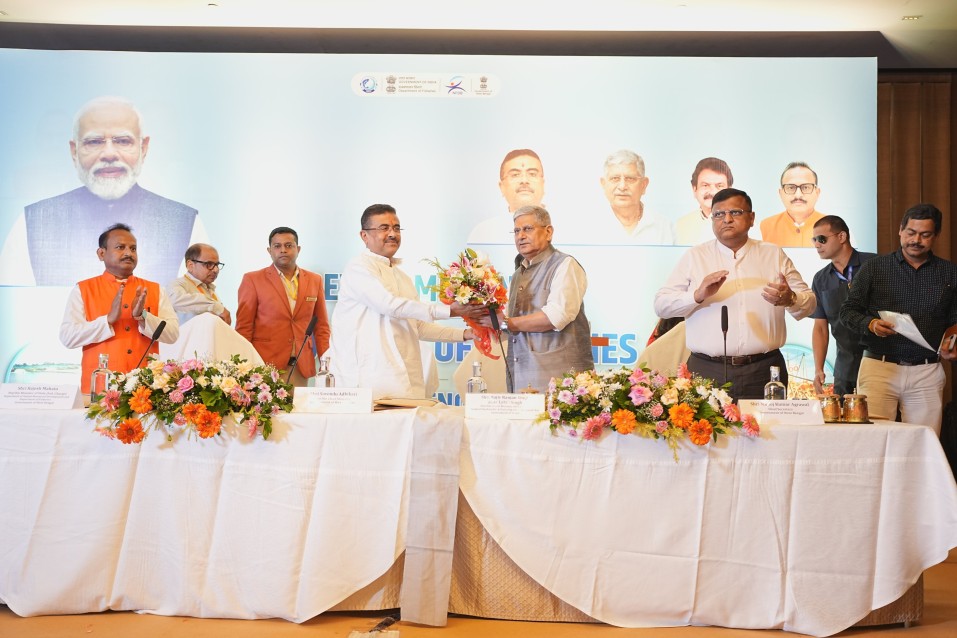
During the event, the Vice President also launched the Odisha Deep Sea Fishing Mission Document and handed over Letters of Authorisation to ten Fish Farmer Producer Organisations (FPPOs) and individual fishermen from different parts of the country, enabling them to undertake regulated fishing operations beyond India's Exclusive Economic Zone (EEZ).
Describing the initiative as a landmark for India's maritime economy, the Vice President said the programme would allow Indian fishing communities to expand beyond traditional coastal waters and explore the immense potential of deep-sea fisheries.
India has a coastline of more than 11,000 kilometres and an Exclusive Economic Zone (EEZ) of nearly 2.4 million square kilometres. Despite this vast marine territory, much of the country's deep-sea fishery resources remain underutilised. The new authorisation framework aims to encourage Indian fishermen to target high-value species, particularly tuna, in distant waters through regulated and sustainable operations.
India is currently the world's second-largest fish producer, contributing nearly 8% of global fish production. The fisheries sector supports the livelihoods of around three crore fishermen and fish farmers, while seafood exports crossed ₹73,000 crore in the previous financial year.
The government expects the High Seas Fishing Programme to create fresh opportunities not only in harvesting but also in processing, cold chain infrastructure, packaging, transportation, logistics and seafood exports, generating employment across the fisheries value chain.
Under the new framework, preference will be given to Fish Farmer Producer Organisations (FPPOs), fisheries cooperatives and Indian fishermen while issuing Letters of Authorisation. The move is intended to strengthen community participation and ensure that the benefits of deep-sea fishing reach organised fishing groups and coastal communities.
The programme places a strong emphasis on responsible fishing. Authorities will implement digital authorisation systems, vessel monitoring mechanisms and international certification standards to ensure compliance with global norms. The government also stressed strict measures to prevent Illegal, Unreported and Unregulated (IUU) fishing, which remains a major concern for marine resource conservation worldwide.
Addressing young people, the Vice President encouraged them to view fisheries as a modern, technology-driven profession offering significant opportunities in science, innovation and global seafood markets. He also called for continued support from institutions in providing technology, finance and capacity building to fishing communities.
India has taken a major step towards expanding its marine fisheries sector with the launch of a national programme for issuing Letters of Authorisation (LoAs) for sustainable fishing in the High Seas. The initiative, unveiled by Vice President Shri C. P. Radhakrishnan in Bhubaneswar on Thursday, is expected to help Indian fishermen tap the country's vast untapped marine resources while ensuring responsible and sustainable fishing practices.
During the event, the Vice President also launched the Odisha Deep Sea Fishing Mission Document and handed over Letters of Authorisation to ten Fish Farmer Producer Organisations (FPPOs) and individual fishermen from different parts of the country, enabling them to undertake regulated fishing operations beyond India's Exclusive Economic Zone (EEZ).
Describing the initiative as a landmark for India's maritime economy, the Vice President said the programme would allow Indian fishing communities to expand beyond traditional coastal waters and explore the immense potential of deep-sea fisheries.
India has a coastline of more than 11,000 kilometres and an Exclusive Economic Zone (EEZ) of nearly 2.4 million square kilometres. Despite this vast marine territory, much of the country's deep-sea fishery resources remain underutilised. The new authorisation framework aims to encourage Indian fishermen to target high-value species, particularly tuna, in distant waters through regulated and sustainable operations.
India is currently the world's second-largest fish producer, contributing nearly 8% of global fish production. The fisheries sector supports the livelihoods of around three crore fishermen and fish farmers, while seafood exports crossed ₹73,000 crore in the previous financial year.
The government expects the High Seas Fishing Programme to create fresh opportunities not only in harvesting but also in processing, cold chain infrastructure, packaging, transportation, logistics and seafood exports, generating employment across the fisheries value chain.
Under the new framework, preference will be given to Fish Farmer Producer Organisations (FPPOs), fisheries cooperatives and Indian fishermen while issuing Letters of Authorisation. The move is intended to strengthen community participation and ensure that the benefits of deep-sea fishing reach organised fishing groups and coastal communities.
The programme places a strong emphasis on responsible fishing. Authorities will implement digital authorisation systems, vessel monitoring mechanisms and international certification standards to ensure compliance with global norms. The government also stressed strict measures to prevent Illegal, Unreported and Unregulated (IUU) fishing, which remains a major concern for marine resource conservation worldwide.
Addressing young people, the Vice President encouraged them to view fisheries as a modern, technology-driven profession offering significant opportunities in science, innovation and global seafood markets. He also called for continued support from institutions in providing technology, finance and capacity building to fishing communities.
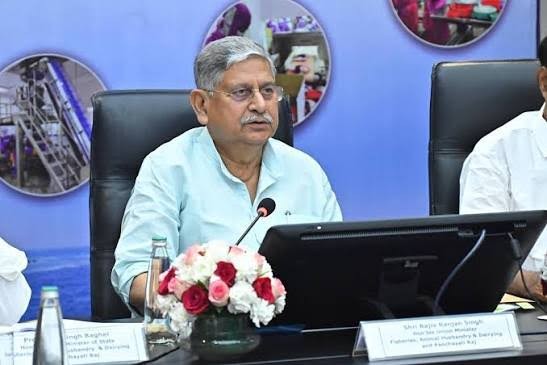
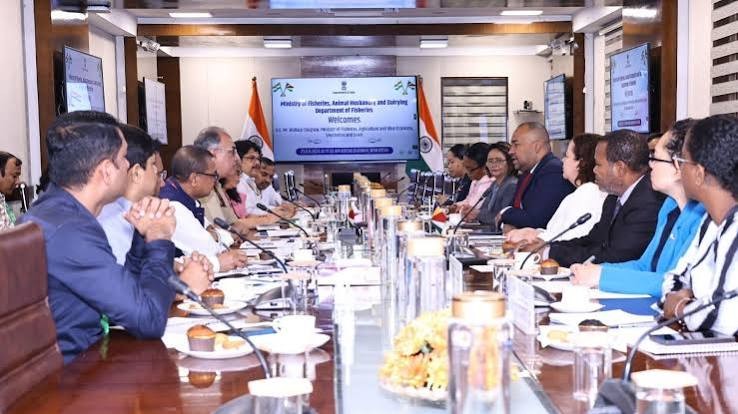
The programme was attended by Odisha Governor Hari Babu Kambhampati, Chief Minister Mohan Charan Majhi, Union Minister for Fisheries Rajiv Ranjan Singh, Union Education Minister Dharmendra Pradhan, Minister of State Prof. S. P. Singh Baghel, Odisha Minister of State for Fisheries & MSME Gokulananda Mallik, along with senior officials, fisheries experts and representatives of fishermen's organisations from across the country.
The programme was attended by Odisha Governor Hari Babu Kambhampati, Chief Minister Mohan Charan Majhi, Union Minister for Fisheries Rajiv Ranjan Singh, Union Education Minister Dharmendra Pradhan, Minister of State Prof. S. P. Singh Baghel, Odisha Minister of State for Fisheries & MSME Gokulananda Mallik, along with senior officials, fisheries experts and representatives of fishermen's organisations from across the country.