Facebook
 Linked In
 Twitter
 YouTube

IndiAgri Bureau
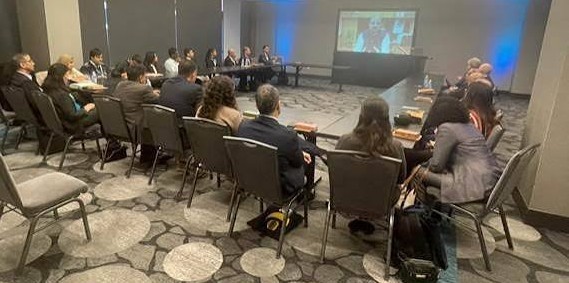
New Delhi: India needs stronger international research partnerships and closer collaboration between universities and industry to prepare agricultural professionals for emerging challenges, including climate change, natural resource degradation and food security, according to Dr. M. L. Jat, Secretary of the Department of Agricultural Research and Education (DARE) and Director General of the Indian Council of Agricultural Research (ICAR).
Jat made the remarks virtually while addressing a roundtable organised alongside the 2026 Norman E. Borlaug International Dialogue in Des Moines, Iowa, in the United States. He spoke in his capacity as president of the National Academy of Agricultural Sciences (NAAS), India, at a programme hosted by the World Food Prize Foundation.
He called for agricultural education and research to evolve beyond a traditional focus on crop production and take a broader view of agri-food systems, including processing, value addition and market linkages.
According to Jat, stronger ties between academic institutions and industry are needed to develop skilled professionals who can meet the changing requirements of the agricultural sector. Greater industry participation across the agri-food value chain could also help connect research and education more closely with farmers’ needs.
Jat highlighted India's existing partnerships with international institutions, saying cross-border collaboration provides opportunities to exchange scientific knowledge, share educational advances and address common agricultural challenges.
He also emphasised the role of the National Academy of Agricultural Sciences in connecting research with policymaking. Policy dialogues, research papers and policy briefs, he said, can help bring scientists, policymakers, universities, industry representatives and other stakeholders together to develop responses to emerging issues in agriculture.
Another area of focus was greater engagement with the Indian agricultural diaspora. Jat said stronger links between overseas experts and domestic research and educational institutions could facilitate knowledge exchange and bring international experience into India's agricultural education system.
He also referred to a memorandum of understanding signed with the Council for Agricultural Science and Technology (CAST), which is expected to create opportunities for cooperation in agricultural research, capacity development and knowledge sharing.
Jat said international partnerships could play an important role in strengthening agricultural research, education and extension, particularly across countries of the Global South. Collaboration will be important as agricultural systems face mounting pressure to produce nutritious food while conserving natural resources and adapting to climate change.
The roundtable was attended by representatives of NAAS, including its Secretary, Dr. B. S. Dwivedi; Foreign Secretary, Dr. Karim Meredia; and Convener of its International Chapter for the Western Hemisphere, Dr. P. V. Varaprasad.
The discussions highlighted the need to connect agricultural education more closely with industry requirements, policy priorities and global research networks as India prepares the next generation of agricultural professionals.

.jpeg)
.jpg)

.jpg)