 Facebook
 Linked In
 Twitter
 YouTube

Priya Singh
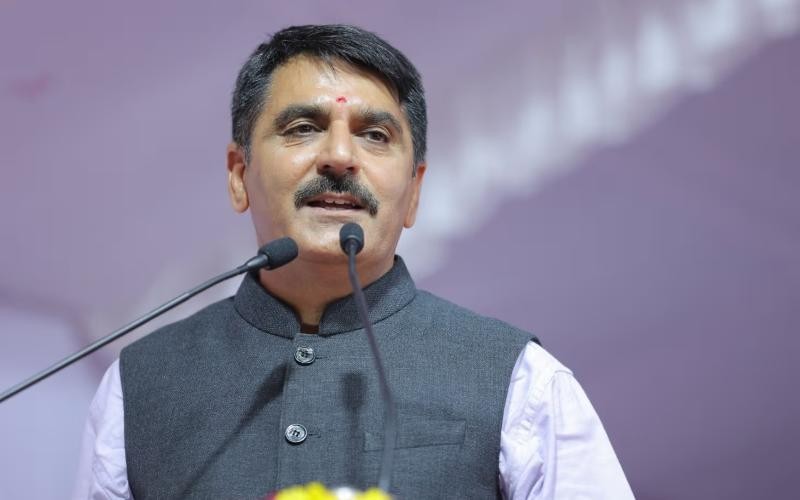
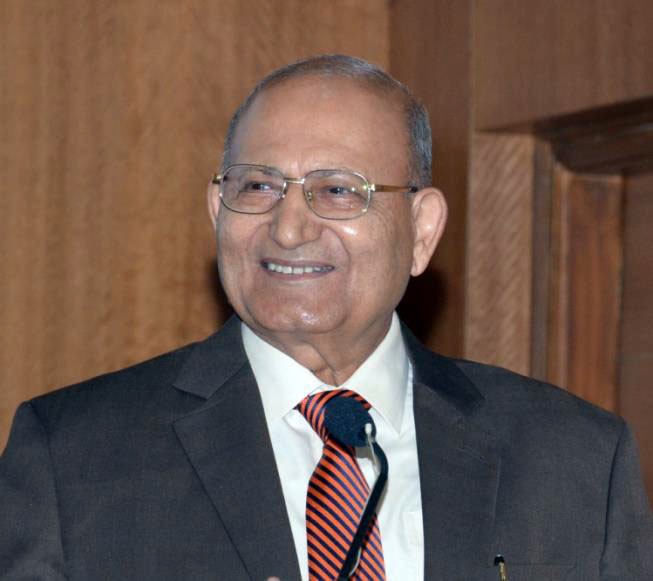
Ahmedabad: The journey of Shri Shankar Chaudhary reflects how cooperative institutions can become a powerful engine for rural economic development, particularly when dairy, agriculture, finance, water conservation and value addition are brought together.
Born in Varanagar, a small village in Gujarat's border region, Chaudhary's public life has been closely associated with cooperative development and rural transformation. He currently serves as Speaker of the Gujarat Legislative Assembly and Chairman of Banas Dairy.
A significant part of this journey has been linked to the transformation of institutions serving farmers in Banaskantha. Under his leadership, Banas Dairy has expanded far beyond traditional milk collection, building a wider ecosystem around dairy farmers, women, livestock owners and rural communities.
Banas Dairy's growth illustrates the scale that a farmer-owned cooperative can achieve. Its turnover has reached around Rs 24,000 crore, with the cooperative emerging as one of the largest dairy organisations in Asia. The Ministry of Cooperation has highlighted the role of farmers and women in building this cooperative enterprise.
The transformation has also been accompanied by efforts to increase the economic returns to dairy farmers. Banas Dairy has expanded its processing and market presence beyond Gujarat, including dairy facilities in Uttar Pradesh. A new facility under construction at Mitli in Baghpat district is being developed with a milk processing capacity of 16 lakh litres per day, along with facilities for milk pouch packaging, curd and buttermilk.
The cooperative's approach increasingly extends beyond milk. Banas Dairy has been developing initiatives around agriculture, livestock, bioenergy, waste management and resource conservation, creating what can be described as a broader rural value chain.
One important area is the conversion of cattle dung into useful products. Banas Dairy has established Bio-CNG and fertiliser facilities as part of its circular-economy approach. In December 2025, Union Home and Cooperation Minister Amit Shah inaugurated a Bio-CNG and fertiliser plant developed by Banas Dairy and described the model as an example that could be replicated by cooperative organisations elsewhere.
Water conservation has emerged as another important component of the Banas model. The cooperative has undertaken large-scale efforts involving water harvesting, recharge structures and ponds in the water-stressed Banaskantha region. Banas Dairy's conservation work has also received national recognition, including a National Water Award for its efforts in water conservation and management.
The cooperative's focus on rural development is also reflected in its efforts to strengthen the wider livestock economy. Better dairy infrastructure, market access, processing capacity and value addition can help farmers retain a greater share of the value generated from their livestock.
The model is also increasingly looking at technology and innovation. In 2026, Chaudhary and the Banas Dairy leadership interacted with startups at i-Hub Gujarat to explore applications of technology in areas such as cattle health, milk quality, automation, artificial intelligence, supply chains, waste-to-wealth and energy efficiency.
This expansion reflects a broader shift in India's cooperative movement, where dairy cooperatives are increasingly looking beyond milk procurement towards value-added products, renewable energy, agriculture, water conservation and rural infrastructure.
The Banas experience therefore offers an example of how a cooperative can evolve from a milk collection network into a broader rural economic ecosystem. Its growth has been built around farmers, livestock owners and village-level institutions, while investments in processing, technology and sustainability have created new avenues for value creation.
The journey from a small border-region village to leading one of India's largest dairy cooperatives highlights the potential of cooperative institutions to connect farmers with markets, technology, finance and value addition.
For rural India, the larger lesson is clear: when farmers are at the centre of an organised value chain, cooperation can become more than a system of collective marketing. It can become a platform for income generation, rural infrastructure, sustainability and long-term economic development.






.jpg)