Facebook
 Linked In
 Twitter
 YouTube

Divyansh Upadhyay
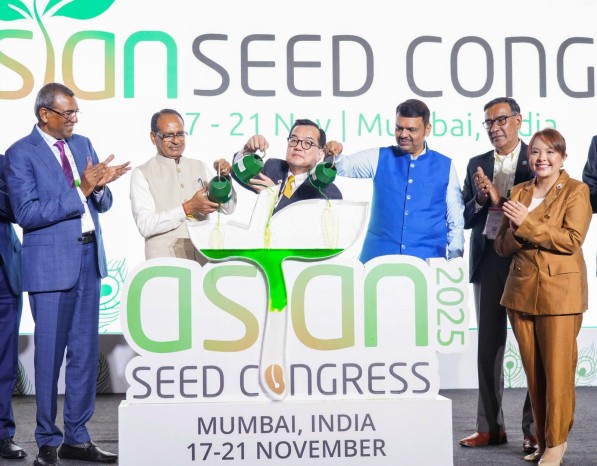
The Asian Seed Congress 2025 opened in Mumbai today with much fanfare, marking a major gathering for the seed sector in India and Asia at large. The event, which carries the theme “Sowing the seeds of prosperity through quality seeds,” was inaugurated by the Union Agriculture & Farmers’ Welfare and Rural Development Minister, Shivraj Singh Chouhan, who emphasised the twin imperatives of enhancing seed quality and ensuring affordability for farmers. The event brings together public-sector institutions, private seed companies and international bodies to focus on strengthening the seed ecosystem in India.
During his address, the minister laid out the government’s three-fold agenda: guaranteeing food security, enabling nutritious diets and ensuring profitable farming. He said that India must ensure that farming remains a viable business while simultaneously raising productivity per hectare and reducing input costs. He pointed out that the development of climate-resilient and biofortified varieties is central to this effort, and stressed that the contribution of the private seed industry cannot be overlooked. He further appealed to seed companies to make their offerings more affordable, especially given the large number of small and marginal farmers in the country.
The establishment and leadership of two key industry bodies were brought into sharp focus at the Congress. The National Seed Association of India (NSAI), which represents seed‐production companies and plays a pivotal role in industry advocacy, set the tone by acknowledging the Congress as an important platform to tackle contemporary challenges in the seed sector. In his remarks, Shri N. Prabhakar Rao, Chairman of NSAI, described the event as “an extremely important step for addressing modern changes and problem resolution in the seed sector”.
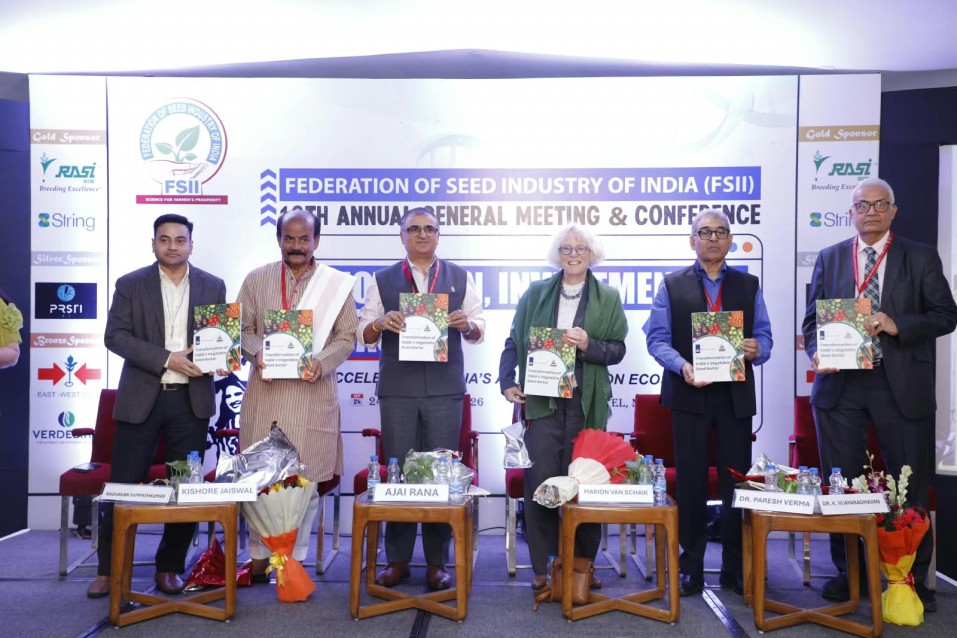
Parallel to the role of NSAI, the Federation of Seed Industry of India (FSII) is co-chairing the Congress alongside APSA (Asia & Pacific Seed Association), under the chairmanship of Ajay Rana. FSII serves as a voice for seed manufacturers and distributors, working to build partnerships, promote innovation and align the industry with national and global seed‐sector standards. Their engagement highlights the private sector’s growing role in shaping seed quality, regulatory reforms and value‐chain resilience. At the Congress opening, Ajay Rana said, “By working together across public research, regulation and industry, we can build a seed ecosystem where Indian farmers benefit from the latest genetics and also have access at an affordable price.”
The minister also used the occasion to underline regulatory intentions. He announced that the government is considering a new law covering seeds and pesticides, which will be introduced in the upcoming budget session. He warned that action will be taken against those found guilty of supplying poor-quality seeds, and urged companies to address germination failures and other quality complaints. He specifically noted the need for seed companies to accelerate testing and reduce time-to-market for new varieties—a significant ask given the pressures of climate change and evolving agro‐climatic zones.
A further operational tool highlighted by the minister was the SATHI portal, which he invited all stakeholders to log into and utilise. The portal aims to integrate stakeholder data and services across the seed and agriculture value chain. He remarked that the 15 agro‐climatic zones of India demand seed varieties that withstand drought, heat and pest stress, and pointed to two newly developed rice varieties using genome-editing techniques that claim 19-40 % higher productivity with lower water usage and emissions.
The Asian Seed Congress 2025 is scheduled to run from 17 to 21 November, and the inaugural day hosted a workshop, followed by the Annual General Meeting scheduled for 20 November. The Congress promises a range of technical sessions, business fora and exhibitions. With FSII and NSAI playing critical organiser and advocacy roles respectively, the seed industry is gearing up for a phase where quality, innovation and affordability come together to drive the next wave of Indian agriculture.
For India’s farmers, the push for higher quality seeds is not just about higher yields—it is about resiliency, profitability and competitiveness. With both government policy and industry bodies aligning around this theme, the Congress underscores that seeds will remain a foundational element of India’s agricultural future.


.png)