Facebook
 Linked In
 Twitter
 YouTube

Priya Singh

New Delhi: India needs to move beyond responding to droughts after they occur and focus on building resilient dryland landscapes through watershed development, digital technology and stronger community participation, Department of Land Resources (DoLR) Secretary Narendra Bhooshan said at the Dryland Congress 2026 in New Delhi.
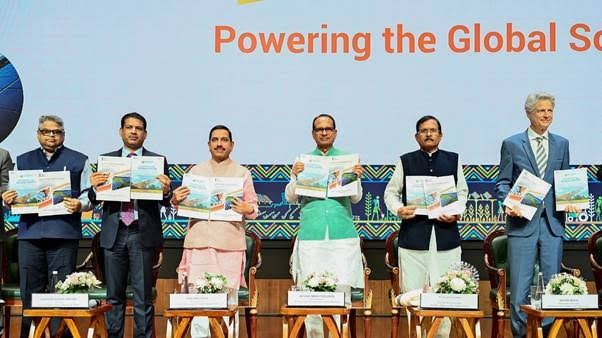
Speaking at the Dryland Congress 2026 Partner Spotlight at the National Agricultural Science Complex (NASC), Bhooshan discussed the role of institutions, Digital Public Infrastructure and community action in building climate-resilient agricultural systems.
The Congress, which began on September 10, has brought together more than 800 participants from over 25 countries, including scientists, policymakers, development organisations, industry representatives, academicians, civil society groups and farmers.
Bhooshan emphasised that drylands should not be viewed as wastelands but as productive landscapes whose potential is affected by climatic variability.
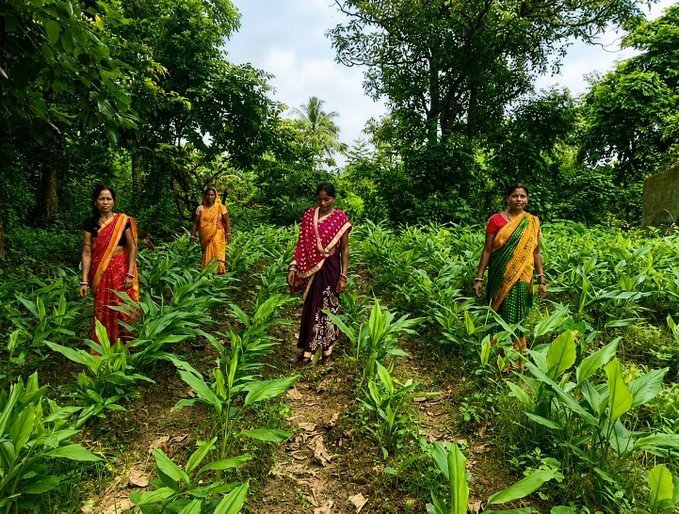
According to the figures shared at the event, rainfed agriculture covers about 61.39 million hectares, accounting for around 43% of India’s net sown area and contributing nearly 40% of the country’s food production.
He stressed the importance of integrated landscape management, particularly the watershed approach, which brings together land, water, vegetation and livelihoods.
The approach, he noted, can help restore natural resources while strengthening the economic base of rural communities.
Bhooshan highlighted the work undertaken under the Watershed Development Component of Pradhan Mantri Krishi Sinchayee Yojana (WDC-PMKSY), implemented by DoLR.
Over the past 12 years, 7,602 watershed development projects covering around 34 million hectares have been implemented.
The interventions have also resulted in:
According to DoLR, completed watershed projects have demonstrated a Benefit-Cost Ratio of around 2:1, along with improvements in groundwater availability, cultivated area, cropping intensity, milk production and farmers’ incomes.
Bhooshan said watershed development needs to move beyond simply mapping assets through Geographic Information Systems (GIS) to using data and technology to assess whether landscapes are actually becoming more resilient.
The proposed Watershed Portal is expected to provide an integrated Digital Public Infrastructure covering the lifecycle of watershed projects and bringing together key geospatial datasets.
The broader objective is to use digital systems not only to track where infrastructure exists, but also to generate evidence on how interventions are affecting water, agriculture and livelihoods.
The DoLR Secretary also stressed that technology and institutions alone cannot deliver lasting change without community ownership.
The approach envisaged combines digital tools for evidence, institutions for implementation and communities for ownership.
Stronger partnerships between governments, research institutions, development organisations and local communities, he said, could help India develop a scalable Indian Dryland Development Roadmap.
The discussions at Dryland Congress 2026 placed watershed development within a broader framework of climate resilience, natural capital restoration, water security and rural livelihoods.
The vision is to make watershed areas more than administrative or project boundaries and use them as platforms for restoring natural resources, strengthening agriculture and creating sustainable livelihood opportunities.
Bhooshan said India has an opportunity to demonstrate a scalable model of dryland landscape restoration and rural prosperity, contributing to the Viksit Bharat@2047 vision.