Facebook
 Linked In
 Twitter
 YouTube

Priya Singh
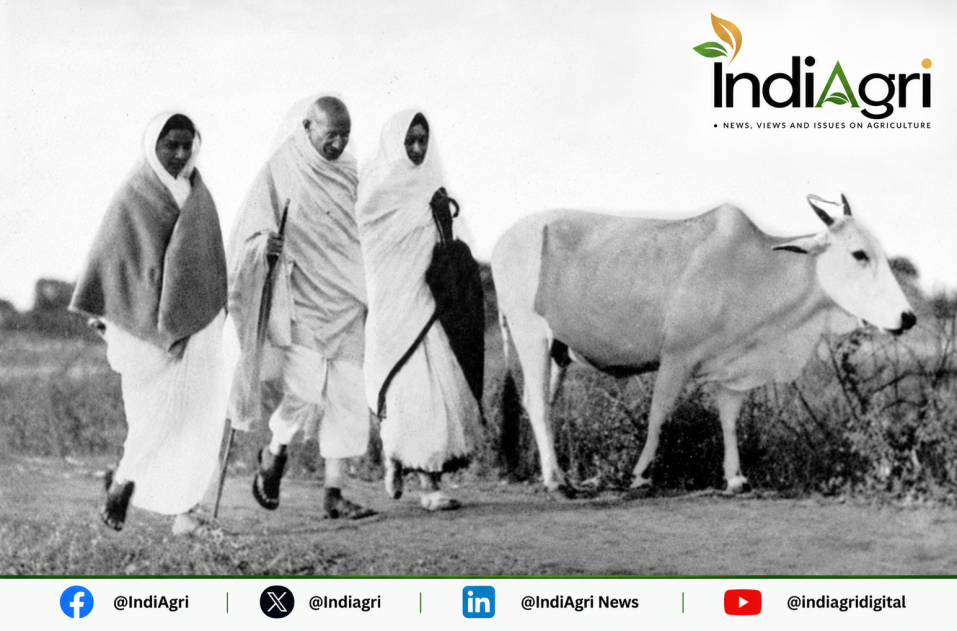
New Delhi: As India observes the 157th birth anniversary of Mahatma Gandhi, his ideas on agriculture and rural development offer a different way of looking at some of the challenges facing Indian farming today.
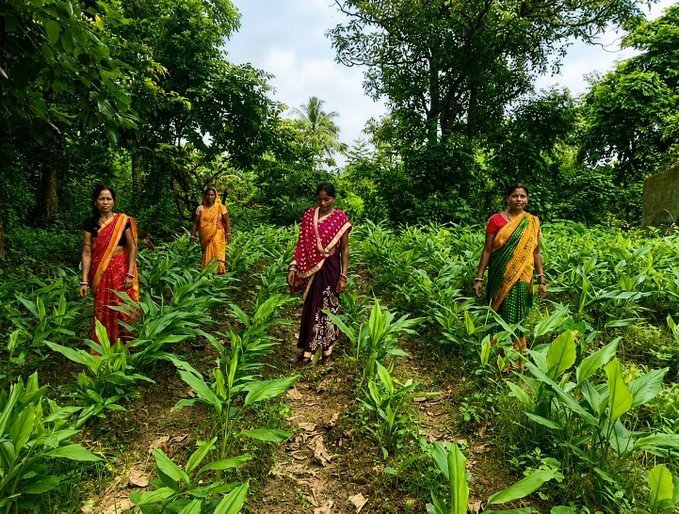
For Gandhi Ji, agriculture was not simply about growing crops. It was closely linked to the economic strength of villages, local employment, self-reliance and the responsible use of natural resources. His idea of Gram Swaraj placed the village at the centre of economic and social development, with agriculture forming its foundation.
Bapu believed that a strong rural economy could not depend on farming alone. Agriculture, cattle rearing, dairying, oil pressing, food processing, khadi and other village industries were meant to work together, creating employment and additional sources of income for rural households. His writings on village industries repeatedly emphasised the importance of keeping economic activity connected to village communities.
This approach was also rooted in the principle of self-reliance without isolation. Bapu's vision did not mean that villages should cut themselves off from the wider economy. Instead, villages should be capable of meeting many of their basic needs while cooperating and exchanging goods and services with neighbouring communities.
Agriculture, in this framework, had to remain connected with nature. Sustainable use of land and water, cattle welfare and village-based economic activity were part of a larger vision in which rural development was not separated from environmental responsibility. The emphasis was on strengthening the farmer and the village economy rather than creating dependence on distant markets and institutions.
Gandhi Ji also attached considerable importance to decentralisation and participatory governance. His concept of village self-rule envisaged local communities taking greater responsibility for their own economic and social affairs. The later development of Panchayati Raj institutions in India reflects, in part, the continuing relevance of decentralised rural governance.
Another important element was the relationship between agriculture and village industries. Gandhi Ji argued that farming families needed opportunities beyond cultivation, particularly during periods when agricultural work was limited. Cottage and small-scale industries could provide supplementary income while keeping skills, employment and economic activity within rural communities.
His thinking also placed human dignity at the heart of rural development. The objective was not merely to increase production, but to ensure that farmers, artisans and rural workers could earn a livelihood with dignity. Education, skills, sanitation, women's empowerment and local enterprise were therefore part of his broader constructive programme for village reconstruction.
India's agriculture has changed dramatically since Gandhi Ji’s time. Mechanisation, improved seeds, irrigation, biotechnology, digital tools and modern markets have transformed farming. Yet the basic questions Gandhi Ji raised remain familiar: How can farm families earn stable incomes? How can rural employment be strengthened? How can natural resources be used without exhausting them? And how can villages participate more meaningfully in decisions affecting their own future?
Modern agricultural technology can address many of these challenges, but Gandhi Ji’s larger argument was that technology and economic growth should ultimately serve people and strengthen communities.
More than seven decades after his death, his agricultural vision therefore remains less about returning to the past and more about reconsidering the relationship between farming, rural livelihoods, local enterprise, sustainability and self-reliance. For a country where millions of families continue to depend on agriculture and allied activities, that conversation remains relevant.
On Gandhi Jayanti, his message for agriculture may be summed up not merely as producing more, but as building stronger villages around the farmer.