Facebook
 Linked In
 Twitter
 YouTube

Priya Singh
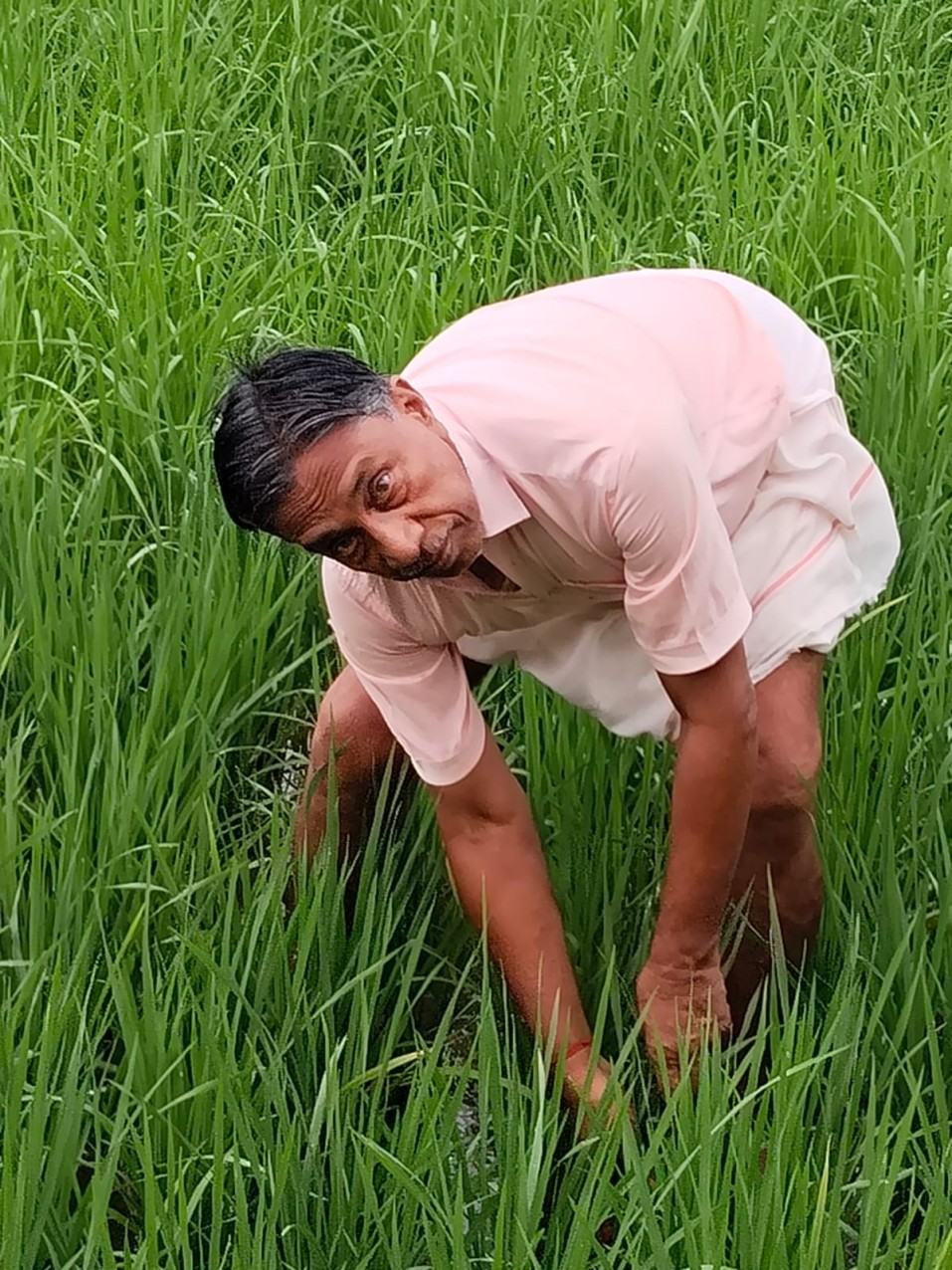
Rohtas: From horticulture and organic farming to vermicomposting, beekeeping and innovative crop protection, the farmer from Rajpur, Rohtas, has built a model of diversified and progressive agriculture.
It is often said that hard work never goes unrewarded. The journey of progressive farmer Vijay Bahadur Singh from Rajpur in Rohtas district of Bihar is an example of how determination, innovation and a willingness to experiment can transform agricultural practices and create new opportunities for the farming community.
Singh has demonstrated that agriculture is not limited to conventional cultivation. Over the years, he has adopted several innovative farming practices and diversified his agricultural activities.His work ranges from horticulture and improved irrigation techniques to organic farming, mushroom cultivation, beekeeping, vermicomposting, NADEP composting and other agricultural activities.
His efforts have brought him recognition not only for his economic achievements but also for his contribution to the farming community. Farmers from several villages in Rohtas district have been inspired by his work, whether in horticulture, irrigation techniques or other innovative agricultural practices.
His journey also reflects how government institutions, agricultural universities and extension agencies can help progressive farmers take their innovations to a wider community. Vijay Bahadur Singh has developed a diversified agricultural model that includes horticulture, vegetable cultivation and other allied activities. His farm has a variety of fruit-bearing plants, with approximately 1,500 trees of different varieties.
His horticultural activities include several fruit crops, including mango, guava, lemon, banana, jackfruit and other varieties. He has also adopted intercropping in his orchard, allowing him to generate additional income alongside fruit production.
He has made use of modern agricultural inputs and practices, including bio-fertilisers, bio-pesticides and other scientific methods, to improve productivity in his orchard and vegetable cultivation.
His efforts have helped demonstrate the potential of diversified farming and the importance of combining horticulture with vegetable cultivation to improve farm income.
After establishing his horticultural activities, Singh faced the challenge of irrigation. Instead of depending entirely on conventional methods, he adopted micro-irrigation techniques with support from the Agriculture Department.
Through drip and sprinkler irrigation systems, he improved water management across his orchard and vegetable fields. These techniques helped him achieve better irrigation with less water.
He has adopted different irrigation systems according to the requirements of various crops. These include online drip irrigation, in which individual drippers are fitted externally to pipes and positioned near the roots of fruit-bearing plants to deliver water directly, and inline drip irrigation, which uses pipes with pre-installed emitters at fixed intervals to ensure uniform water distribution along vegetable crop rows. Both systems help minimise water wastage by delivering water directly to the plant root zone. In addition, he uses micro-sprinklers for flowers and nurseries, mini-sprinklers for vegetables such as cauliflower, and rain-gun irrigation for wheat cultivation.
The irrigation system is operated through an 8 HP diesel-powered machine.
Singh has also installed vermicompost production units on his farm. He has five vermicompost beds and a unit with ten racks, with an annual production capacity of approximately 600 quintals of vermicompost. He uses the compost extensively in his vegetable, horticulture, paddy and wheat cultivation.
He has also prepared several organic agricultural products, including bio-fertilisers, bio-pesticides and natural pest-control formulations, using locally available resources. These efforts reflect his interest in reducing dependence on chemical inputs and promoting sustainable agricultural practices.
One of the most notable innovations in Singh's farming journey has been his effort to protect crops from damage caused by nilgai.
According to Singh, nilgai frequently destroy standing crops, causing substantial losses to farmers. The problem was particularly serious in his area, where farmers were struggling to protect their fields. Conventional measures were not providing a satisfactory solution.
Determined to find an alternative, Singh began experimenting with nets made from parachute cord. He developed a protective net using a 7 × 7 mesh arrangement, which could be installed around agricultural fields to prevent nilgai from entering and damaging crops.
The innovation attracted attention among local farmers because it offered a practical approach to a persistent agricultural problem.
Singh has also worked on making such nets accessible to other farmers. He believes that this innovation should reach the wider farming community, as it can help reduce crop losses and provide farmers with greater protection.
He has reportedly documented his work through video recordings as well, with the objective of sharing the innovation with others.
Apart from managing his own farm, Vijay Bahadur Singh has actively contributed to agricultural knowledge dissemination. He has served as the president of a progressive farmers' interest group formed under Agricultural Technology Management Agency (ATMA) and has worked to familiarise fellow farmers with scientific agricultural techniques.
He has also been associated with tomato-based farmer training and demonstrations, helping farmers understand improved cultivation practices.
His contribution to agriculture has received recognition from several institutions. He has been associated with Bihar Agricultural University, Sabour (Bhagalpur), as a Master Trainer and is also mentioned as a member of its research council.
He has participated in agricultural training programmes and seminars, including events organised by the National Research Centre and other agricultural institutions in Delhi, Gujarat and Bengaluru.
On 5 October 2013, he was recognised at an agricultural programme in connection with the Indian Council of Agricultural Research. The handwritten account also records his recognition by senior agricultural officials, including Dr Mangala Rai.
On 9–10 December 2013, during the Vibrant Gujarat Summit, he was reportedly the only farmer from Rohtas district to receive recognition. The then Chief Minister of Gujarat, Narendra Modi, honoured him with a cash award of ₹51,000, a certificate and a traditional angavastram.
Another significant recognition came on 24 February 2014, when he was honoured with the Kisan Samrat Samman at the Mahindra Samriddhi India Awards ceremony held at the Ashoka Hotel in New Delhi. The award was presented by the then Union Minister of State for Agriculture, Tariq Anwar.
These recognitions acknowledged his contribution to agricultural innovation, diversification and the wider farming community.
Vijay Bahadur Singh's journey demonstrates that progressive agriculture is not simply about increasing production or earning higher income. It is also about identifying local challenges, developing practical solutions and sharing knowledge with fellow farmers.
Through horticulture, scientific irrigation, compost production, organic inputs and innovative crop-protection methods, he has shown how farmers can diversify their activities and explore new opportunities.
His work in developing protective nets against nilgai damage is particularly significant because it addresses a problem faced by many farmers in the region.
For Singh, agricultural innovation should not remain confined to an individual farm. It should reach other farmers and contribute to the larger agricultural community.
His journey is a reminder that farmers themselves can become important contributors to agricultural research, innovation and rural development when they are willing to experiment, learn and share their experiences.





.jpg)
.jpeg)