Facebook
 Linked In
 Twitter
 YouTube

Priya Singh
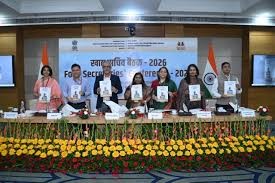
New Delhi: The Department of Food and Public Distribution (DFPD) reviewed foodgrain procurement, storage, transportation and Public Distribution System (PDS) reforms at a conference of State and Union Territory Food Secretaries in New Delhi on September 1.
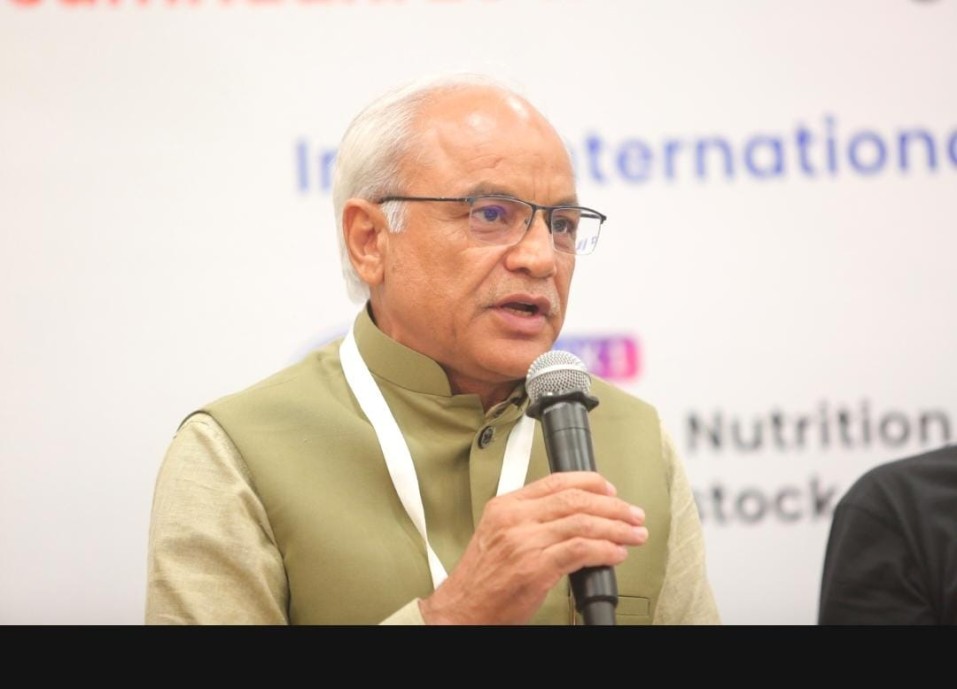
The meeting, chaired by DFPD Secretary Sanjeev Chopra, brought together Food Secretaries from States and UTs along with officials from the Food Corporation of India (FCI).
Following discussions with States and UTs, paddy procurement for the Kharif Marketing Season (KMS) 2026-27 has been estimated at 708.64 lakh metric tonnes (LMT).
The conference also reviewed the rollout of Improved Rice under PMGKAY and other welfare schemes. From KMS 2026-27, raw rice procured under the scheme will allow up to 10% broken grains, compared with the earlier 25%. For parboiled rice, the limit will be reduced to 5% from 16%.
States were asked to assess their milling capacity, undertake necessary upgrades and prepare phased implementation plans.
Around 18.85 LMT of coarse grains are also estimated to be procured during KMS 2026-27.
The government said 16.38 LMT of coarse grains and millets were procured during 2025-26, the highest level recorded in the past five years.
The meeting also reviewed the Procurement Centre Smart-Assessment Portal (PCSAP), including the introduction of AI-based image validation from KMS 2026-27.
Progress on Joint Physical Verification (JPV) was also discussed, with online physical verification of paddy proposed at the end of the procurement season from KMS 2026-27.
Andhra Pradesh was recognised for the best implementation of the Improved Rice Scheme, while Punjab received recognition for JPV and PCSAP performance. Karnataka was recognised for excellence in procurement of Shree Anna, and Chhattisgarh for becoming the first state to implement AgriStack in paddy procurement.
The conference reviewed the New Storage Policy, which aims to address gaps between foodgrain procurement and offtake, regional storage imbalances and under-utilisation of existing facilities.
The policy envisages an additional 131 LMT of storage capacity, including 111 LMT through States and 20 LMT through FCI.
States identified under the policy have been asked to submit time-bound action plans. They were also advised to onboard their foodgrain storage facilities onto the Depot Darpan Portal and complete warehouse assessments within the prescribed timelines.
The implementation of the Vehicle Location Tracking System (VLTS), which enables GPS-based real-time tracking of vehicles transporting foodgrains under the PDS supply chain, was also reviewed.
States have been advised to complete VLTS implementation by December 2026, with selected States targeted for completion by September.
The Procurement Optimisation Tool, covering both Kharif and Rabi Marketing Seasons, has already been security-audited and installed in Punjab and Haryana. Other States have been asked to update procurement centre, mill and warehouse data by September 15.
The conference also reviewed the integration of Anna Chakra with State Supply Chain Management Systems and VLTS to reduce manual intervention in data exchange. Integration has been completed in six States, while other States have been given phased timelines for completion.
The government also reviewed technology-driven PDS reforms, including SMART-PDS, SARTHAK-PDS, e-KYC, mobile number seeding, Mera Ration and Anna Mitra applications.
As of July 30, 2026, e-KYC coverage had reached 90.64%.
A new SOP for e-KYC-based data replication and mobile-number seeding through ePOS has also been introduced. The government said the move is intended to make foodgrain delivery easier for beneficiaries.
New procedures for dealing with silent and duplicate ration cards will allow temporary disablement followed by a three-month e-KYC revalidation window. The functionality is scheduled to go live on SMART-PDS from October 1, 2026.
The Digital Rupee-based Direct Benefit Transfer (DBT) pilot for Fair Price Shop (FPS) dealer margins, already launched in Gujarat, Puducherry, Chandigarh and Dadra Nagar Haveli, will be expanded to Delhi and two districts each in Andhra Pradesh, Jammu and Kashmir, Madhya Pradesh, Odisha, West Bengal and Tamil Nadu.
A review workshop is scheduled to be held in Gandhinagar on September 11.
Under SARTHAK-PDS, the umbrella scheme for 2026-31 covering intra-State foodgrain movement and FPS dealer margins with the SMART-PDS technology layer, 100% of the Mother Sanction for FY 2026-27 has been issued to States and UTs.
The government also directed States and UTs to strengthen vigilance mechanisms under the National Food Security Act, 2013.
They have been asked to ensure timely constitution and regular functioning of Vigilance Committees, operationalise Aadhaar-based authentication of foodgrain receipt at Fair Price Shops and submit compliance reports within four weeks.
The discussions underline the government's broader push to combine stronger procurement and storage infrastructure with technology-led monitoring and reforms in the PDS delivery system.