Facebook
 Linked In
 Twitter
 YouTube

Dr Navneet Anand
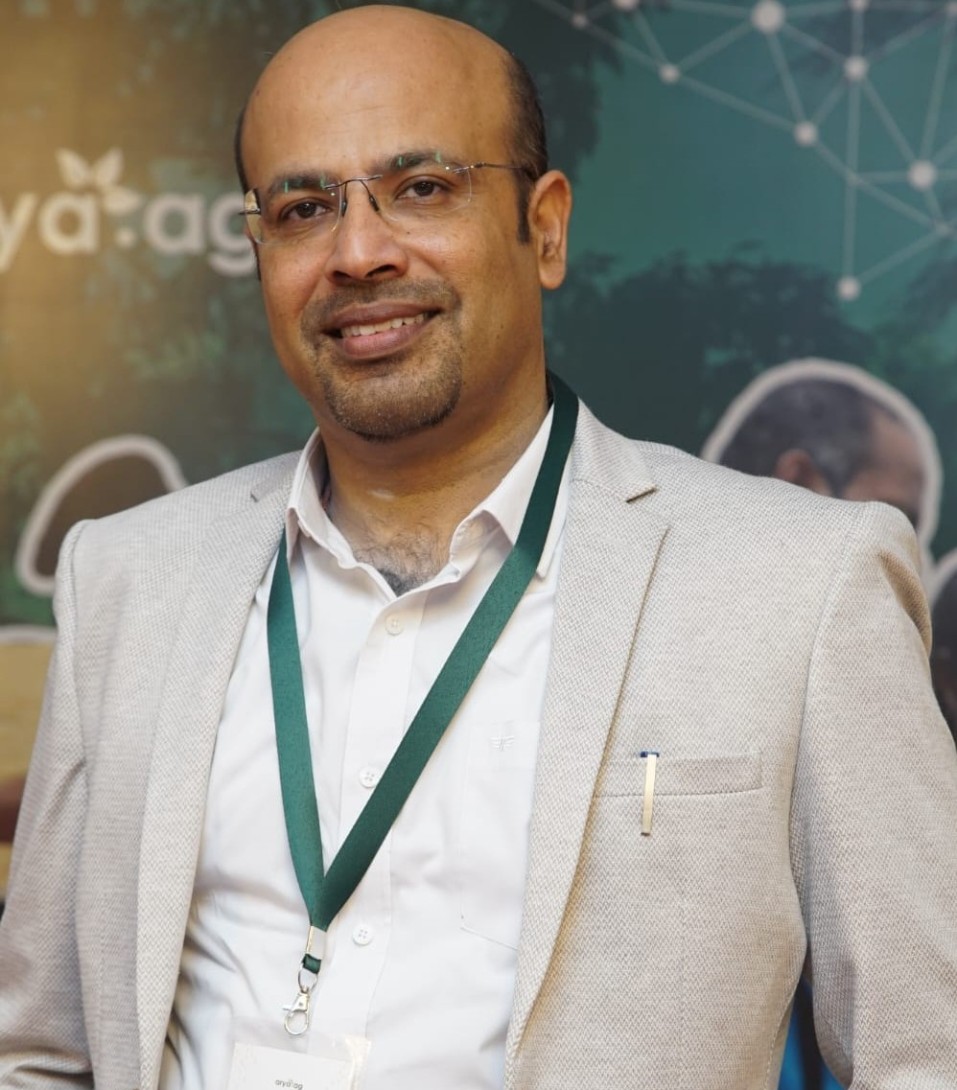
New Delhi: When Anand Chandra chose agriculture as a career, it was not an obvious choice for many young professionals. He saw the sector differently. “Agriculture is one of the most stable and demanding sectors for the coming years,” he says. “It will always remain essential to the economy.”
Today, as co-founder and Chief Operating Officer of Arya.ag, Chandra is working to address one of Indian agriculture’s persistent challenges: farmers often have to sell their produce when they need cash, rather than when market prices are favourable.
His approach combines decentralised warehousing, technology and credit against stored produce to give farmers greater flexibility over when and where they sell. The idea is straightforward: if farmers can access money without immediately selling their harvest, they have a better chance of securing a favourable price.
Chandra studied Agricultural Sciences before completing an MBA in Agribusiness Management at the National Institute of Agricultural Extension Management (MANAGE). What drew him to the sector was the gap between ideas and implementation. “There were plenty of ideas and discussions about solutions, but execution was often lacking,” he says.
He also cautions against treating intermediaries as the problem in themselves. “The existing supply chain helps keep food affordable,” he says. “We need to understand how the system works before trying to change it.”
Chandra’s understanding of agricultural finance developed during his time working in commodity finance at ICICI Bank. He observed that farm lending was constrained not simply by a shortage of capital, but also by gaps in trust, infrastructure and information.
Arya Collateral, then part of the JM Baxi Group, provided services to the bank. Chandra and two colleagues approached the group’s chairman with a proposal to take over the business and run it with a stronger focus on professional management and operational efficiency. They acquired a 65% stake and management control, retaining the Arya name.
When operations began in 2012–13, the company had capital of just ₹1 crore. Six competitors in the warehousing business each had more than ₹200 crore, leaving the new venture with limited room for error.
“That forced us to build strong systems and focus on efficiency from day one,” Chandra says.
The company has been profitable since its first year, according to Chandra. He says it navigated major disruptions, including GST implementation, demonetisation and the COVID-19 pandemic, while delaying employee salaries only once in 14 years—and then by just one day.
For Chandra, financial discipline remains central to the business. He favours profitable growth over expansion at any cost and says Arya.ag does not offer discounts simply to attract customers.
“If a product is valuable, customers should be willing to pay for it,” he says.
A key challenge in agricultural storage is the gap between where crops are produced and where adequate warehousing facilities are available. Many warehouses are located near cities and major markets, while producing regions often have fewer facilities. Existing warehouses may also be too small or too large for the needs of particular farming groups.
A standard warehouse with a capacity of 10,000 tonnes, for instance, may not suit a farmer producer organisation (FPO) handling much smaller volumes.
Arya.ag developed a model designed to work across warehouses of different sizes. Smaller facilities are grouped into clusters and managed using technology to control costs and risks. These facilities can also serve as access points for farmers seeking credit and connections with buyers.
“We did not want to compete with middlemen or banks,” Chandra says. “We created our own space by taking infrastructure to smaller towns and combining storage with finance.”
The model allows farmers to deposit their produce, access money for immediate requirements and postpone selling until market conditions become more favourable.
Speed is an important part of the proposition. Chandra says eligible farmers can receive a loan in under 20 minutes. While Arya.ag may not always match banks on interest rates, he says the company aims to provide an alternative to local moneylenders.
Formal agricultural credit often depends on land records, crop loan histories and financial documentation. Farmers who lack these records can find it difficult to secure loans through conventional channels.
Arya.ag takes a different approach by lending against stored agricultural produce. The company verifies the farmer’s identity and credit details, then determines the eligible loan amount based on the quality and value of the crop.
Chandra says more than 40% of the company’s customers each year access formal credit for the first time through its model. Around 25% move on to banks annually after building a credit history with Arya.ag, often gaining access to lower-cost loans.
The process is designed to reduce paperwork and make transactions easier. Storage agreements can be completed through a one-time password (OTP) on a mobile phone. For eligible customers, a loan sanction letter can be generated within two minutes. The amount depends on the produce’s quality and market price.
Customers receive details by SMS or WhatsApp, accept the terms digitally and receive the funds in their bank accounts. Repayments can also be made remotely through UPI or net banking.
“We do not necessarily rely on disruptive technology,” Chandra says. “We focus on solutions that are simple for the customer but have a big impact.”
The emphasis, he suggests, is less on introducing technology for its own sake and more on making existing financial and storage services accessible to farmers who have traditionally been underserved.
Chandra identifies three principles that guide Arya.ag’s operations: remaining a service provider, responding quickly to customers’ needs and maintaining transparency.
First, the company does not buy or sell the crops stored at its facilities. This separation is intended to ensure that farmers remain free to choose their buyers.
“The customer who stores produce with us should be free to trade it. We do not want to compete with our own customers,” he says.
Second, speed matters because farmers often need money urgently for fertilisers, household expenses or preparations for the next crop. Delays in accessing credit can force them to sell their produce earlier than planned.
Third, transparency is essential to building trust. Customers can access information about their loans, repayments and transactions through their phones.
“When people understand what is happening to their produce and money, they trust the system,” Chandra says.
Together, these principles underpin a model that seeks to give farmers greater control over their produce without requiring them to navigate complex financial processes.
The potential benefit of storage-linked finance becomes clearer when viewed through the timing of crop sales.
Chandra cites an example from Bihar involving maize. When the market opened in May–June, prices were around ₹20 per unit. Farmers needed money to prepare for paddy sowing, creating pressure to sell immediately.
Those who stored their maize and borrowed against it could defer the sale. When prices later rose to ₹27, they were able to sell at a higher rate. According to Chandra, the gain remained above 25% even after accounting for storage and other costs.
He says a third-party study found that farmers using the model experienced income increases of around 15–20%.
“The impact will not be the same for everyone,” he says, “but storage and finance give farmers the freedom to sell when the timing suits them.”
The distinction is important. Storage alone may not be enough to help farmers benefit from better prices if they lack the cash to meet immediate needs. Linking storage with credit can provide that financial flexibility, although the final outcome still depends on price movements, storage costs and the quality of the produce.
Chandra believes government support remains necessary because agriculture is a low-profitability sector in much of the world. However, he argues that public intervention should be better targeted and should leave greater room for market participation.
He wants government procurement and sales to remain focused on requirements such as buffer stocks and food security, while allowing markets to function more effectively.
He also proposes increasing direct income support from ₹6,000 to ₹12,000–15,000 per farmer, linked to landholding size. Satellite imagery and farm data, he says, could help improve the targeting of such assistance.
Chandra supports the reintroduction of the three farm laws that were passed but subsequently repealed. He argues that greater competition and more predictable policies would encourage investment in agriculture.
He also points to implementation gaps in existing schemes. Under the Gramin Bhandaran Yojana, warehouse capacity has expanded, but individual warehouse owners can still struggle to secure bank finance.
For Chandra, these issues reflect a wider need to align infrastructure development with access to capital and predictable rules.
There are signs of increased investor interest in agriculture. Chandra says the sector has attracted greater attention and investment over the past five to seven years, while Arya.ag itself has raised nearly ₹1,100 crore.
Maintaining this momentum, he says, will require policy certainty and a more supportive environment for private investment.
Looking ahead, Chandra believes India’s diverse agro-climatic conditions offer an opportunity to produce a wider range of crops and respond more effectively to domestic and international demand.
With 15 agro-climatic zones, the country can grow a broad variety of agricultural commodities. The challenge, he says, is to plan what is grown and when, taking into account consumption requirements and changing global markets.
“Food will play an increasingly important role in the world's economic and strategic future,” he says.
Arya.ag’s journey has also attracted attention in management education, with its business model being discussed through case studies at IIM Bangalore and Harvard.
Chandra recalls telling his MBA classmates that he wanted to build a business that would eventually speak for itself, without needing a personal introduction. Recognition is welcome, he says, but it is not the ultimate objective.
“What matters most is the work we do and the impact we create.”
For Indian agriculture, the larger question is how to help farmers move beyond selling out of necessity. Storage, accessible credit and better market information cannot remove every risk, but they can give farmers more choices. And for Chandra, that freedom—to decide when to sell and whom to sell to—is central to improving farm incomes.






.jpeg)


.png)