Facebook
 Linked In
 Twitter
 YouTube

Sheldon Fleming
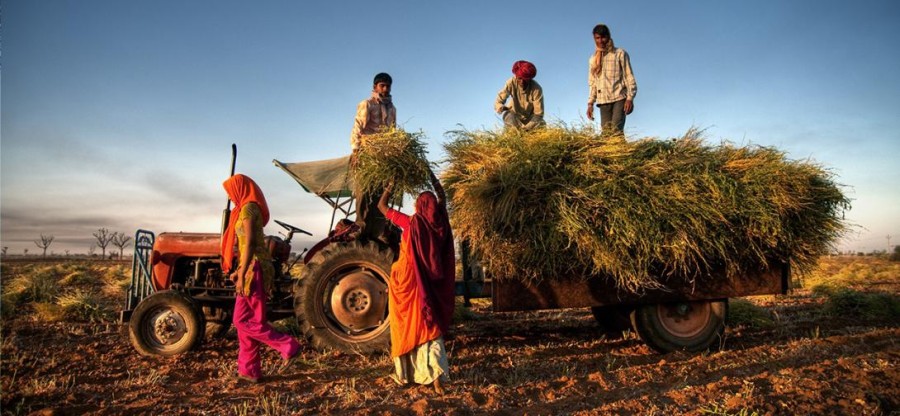
Every few years, a technical-sounding trade policy term quietly makes its way into negotiations and ends up having enormous real-world consequences. Right now, that term is "data exclusivity" and as India hammers out Free Trade Agreements with the European Union and the United Kingdom, it deserves far more public attention than it's getting.
The Global Trade Research Initiative (GTRI) recently put out a report on exactly this issue, and its message to the government is blunt: don't give in. So what is data exclusivity, and why does it matter? When a company develops a new agrochemical, it submits years' worth of safety and trial data to regulators for approval. Data exclusivity means that for a fixed period typically five to ten years no other company can use that data, even to register a generic version of the same chemical. The patent may have already expired. The molecule may be decades old. Doesn't matter. Generic manufacturers either wait it out or spend crores replicating trials that have already been done. That cost doesn't disappear it gets passed straight to the farmer.
GTRI classifies this as a "TRIPS-plus" demand, meaning it goes beyond what international trade law actually requires. India has long resisted such provisions, and the think tank is arguing it must continue to do so.
The stakes are significant. India is the world's third-largest agrochemical exporter, with a trade surplus of nearly $14 billion over the last five years. Around 90% of the global agrochemical market runs on generics this is India's lane, and it has thrived in it. Agreeing to data exclusivity would hand multinational corporations extended monopolies and gradually shift the market from one powered by domestic manufacturing to one dependent on expensive imports. That's not a hypothetical it has happened before.
Between 2007 and 2017, India effectively operated under de facto data exclusivity conditions. Agrochemical imports during that period jumped by 547%. The GTRI report cites a telling example: the herbicide Halosulfuron Methyl 75% was being imported at ₹12,000 per kg and sold to Indian farmers at over ₹40,000 per kg. Three-and-a-half times the import price, paid by farmers who had no alternatives because generic competition had been frozen out. That is what exclusivity looks like on the ground.
Multinationals pushing for data exclusivity often argue that without it, they simply won't bring new products to India. The data doesn't support this. In early 2026 alone, India approved 84 new pesticide registrations. Over the past two years, 36 new molecules were registered here a higher number than in Brazil and Malaysia, both of which already offer data exclusivity. Innovation is clearly not suffering in the absence of these protections. What would suffer, if they were introduced, is competition.
GTRI's ask is straightforward: keep data exclusivity out of the Pesticides Management Bill and out of every FTA India signs going forward. For a country with the largest area of arable land in the world, keeping crop protection affordable and accessible isn't a nice-to-have it's fundamental.
India built its agrochemical sector by being the world's reliable, affordable supplier of generics. Giving that up under diplomatic pressure dressed as concern for innovation would be a costly mistake, one that farmers across the country would feel long after the trade negotiators have moved on.