Facebook
 Linked In
 Twitter
 YouTube

Divyansh Upadhyay
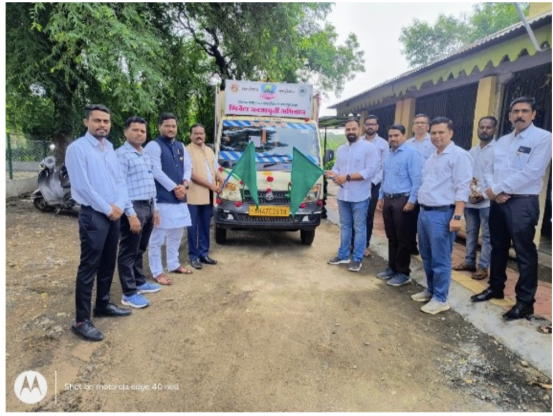
In a significant boost to cotton growers across Maharashtra, Syngenta India has successfully trained more than 42,000 farmers across 1,490 villages, contributing to a noticeable decline in pink bollworm attacks in the state’s major cotton belts. The initiative, implemented in collaboration with Krishi Vigyan Kendras, District Agriculture Departments and local Zilla Parishads, has covered key cotton-growing districts including Yavatmal, Wardha, Akola, Nanded, Amravati and Parbhani.
The training programme combined classroom sessions with field-level demonstrations, helping farmers understand early pest detection, crop-health assessment and the timely use of pheromone traps. As part of the outreach, Syngenta distributed over 3,000 pheromone traps and nearly 900 protective gear kits, enabling farmers to adopt safer and more scientific practices in pest management.
Many farmers reported that the 2025 season saw markedly lower pink bollworm pressure compared to previous years. Ganesh Nanote, a cotton grower from Akola, said that earlier infestations would often go unnoticed until half the lint yield was already damaged, but regular training and close monitoring this year helped farmers respond quickly and protect their fields. Experts estimate that pink bollworm causes annual losses of roughly 3.75 percent of India’s cotton output—amounting to around 0.64 million tonnes and translating to a monetary loss between ₹500 and ₹800 crore. With Maharashtra contributing significantly to national cotton production, any reduction in pest impact has a direct economic benefit for thousands of farming families.
Syngenta India’s Chief Sustainability Officer, Dr K C Ravi, noted that the estimated loss figures are conservative and could be reduced further if farmers maintain consistent monitoring, adopt field-sanitation practices and follow integrated pest-management principles. He emphasized that training not only improves technical knowledge but also gives farmers confidence to act proactively rather than react after the pest has caused visible damage.
While stakeholders welcomed the positive outcomes this year, experts cautioned that long-term pest management requires continuous vigilance. Pink bollworm has a history of developing resistance when farming communities rely solely on reactive chemical interventions. The experience in Maharashtra highlights the need for sustained field-sanitation efforts, wider adoption of pheromone traps, timely uprooting after harvest and crop-rotation practices that disrupt pest life cycles.
For India’s cotton sector, the Maharashtra model presents an encouraging blueprint for collaborative action between private companies, public institutions and farming communities. The scale of outreach and the initial positive impact suggest that similar programmes in states like Telangana, Karnataka and Madhya Pradesh could significantly strengthen national cotton productivity and farmer incomes.
Syngenta’s large-scale awareness and training drive demonstrates how scientific guidance, early detection and preventive strategies can help safeguard one of India’s most important fibre crops. As the cotton season progresses, the focus now shifts to sustaining this momentum and ensuring that more farmers gain access to the knowledge and tools needed to protect their livelihoods from persistent pest threats.