Facebook
 Linked In
 Twitter
 YouTube

Apurva Juyal
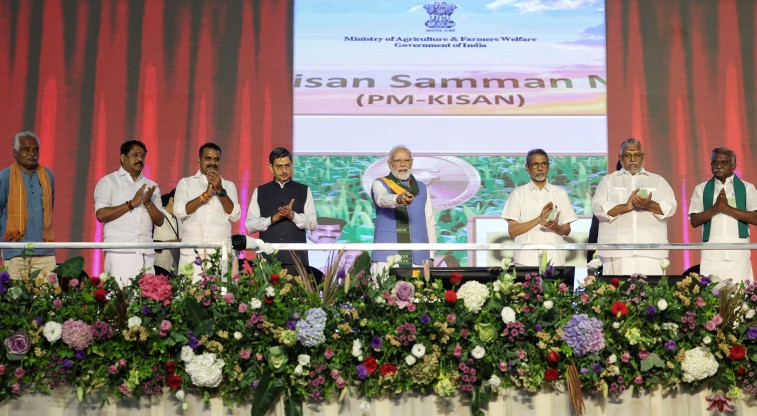
Prime Minister Narendra Modi’s visit to Coimbatore for the South India Natural Farming Summit 2025 turned the city into a national spotlight for India’s next phase of agricultural transition. Addressing more than 50,000 farmers, scientists and agri-experts from across the southern states, the Prime Minister laid out an ambitious call to move India toward natural, chemical-free farming. With Tamil Nadu’s deep-rooted farming traditions as the backdrop, Modi emphasised that natural farming is not a new trend but a Swadeshi, homegrown agricultural wisdom that India has carried for centuries.
At the inauguration of the three-day summit organised by the Tamil Nadu Natural Farming Stakeholders Forum, Modi urged farmers to take up the “one acre, one season” model to understand the benefits of natural cultivation. He called on agricultural institutions to strengthen natural farming through scientific validation and research. Referring to the region’s long heritage of Panchagavya mixtures, Jeevamrit, mulching practices and millet cultivation, he described South India as a “living university of agriculture.” According to the Prime Minister, natural farming stands on indigenous knowledge that India has practiced long before modern chemicals entered its fields.
So what exactly is natural farming? According to the Ministry of Agriculture, natural farming is a completely chemical-free system that relies entirely on resources already available on the farm. This includes plant waste, livestock inputs and locally prepared bio-nutrient solutions. The idea is to minimise external chemical dependence and instead strengthen soil health, biodiversity and ecological balance. The government plans to roll this out first in districts with high fertiliser consumption.
To accelerate this shift, the Union Cabinet last November approved the National Mission on Natural Farming with an outlay of Rs 2,481 crore. This centrally sponsored mission aims to bring one crore farmers into natural farming over the next two years. It also plans to build 10,000 bio-input resource centres across India and support farmers through certification and branding. The mission builds upon an earlier programme known as the Bhartiya Prakritik Krishi Paddhati launched in 2019.
Natural farming is based on the simple idea that nature already has all the processes needed to grow healthy crops. It promotes diversified cropping, recycling nutrients within the farm ecosystem and using bio-inputs prepared from plant, animal and microbial sources. Several models exist globally. In India, the most widely known is Zero Budget Natural Farming developed by Subhash Palekar. ZBNF uses four main components: Jiwamrita, a microbial culture prepared from cow dung, cow urine and natural ingredients; Bijamrita, a seed treatment mixture; mulching to protect topsoil; and Waaphasa, which regulates moisture. These practices together enhance soil microbes that naturally supply nutrients to crops. ZBNF also recommends locally made pest management sprays such as Agniastra, Brahmastra and Neemastra prepared using indigenous cow urine and plant extracts such as neem, datura and garlic.
Modi’s Coimbatore visit was not limited to natural farming alone. During the event, he released the 21st instalment of the PM-KISAN scheme, transferring Rs 18,000 crore directly into farmers’ accounts. Nearly nine crore beneficiaries received the instalment, including lakhs of farmers from Tamil Nadu. The Prime Minister highlighted that more than Rs 4 lakh crore has been transferred to small farmers since the scheme began. He also pointed out that lower GST rates on bio-fertilisers have reduced costs for those shifting to sustainable practices.
PM-KISAN, launched in 2018, provides financial support of Rs 6,000 annually to eligible landholding farmers. The amount is released in three instalments of Rs 2,000 each. The scheme defines a beneficiary family as a husband, wife and minor children owning cultivable land, and only one member from the household can receive the financial support.
Together, PM Modi’s pitch for natural farming and his continued push for farmer income support signal a two-pronged strategy. On one hand, the government aims to strengthen rural livelihoods through direct cash transfers. On the other hand, it is attempting to steer Indian agriculture towards a more sustainable, cost-effective and soil-friendly future. Coimbatore, with its agricultural legacy and strong farmer networks, became the starting point for this renewed national drive.