Facebook
 Linked In
 Twitter
 YouTube

IndiAgri Bureau
Government identifies vulnerable districts, prioritises water conservation, alternative crops, and farmer safety nets to minimise impact on agriculture
As concerns grow over a delayed southwest monsoon and the possibility of El Niño affecting rainfall patterns this year, the Centre has stepped up preparations for the ongoing Kharif season, unveiling a comprehensive contingency strategy aimed at protecting farmers and agricultural production across the country.
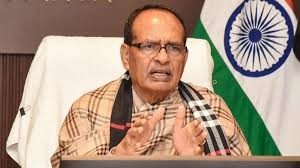
Union Agriculture and Farmers Welfare Minister Shivraj Singh Chouhan chaired a high-level virtual review meeting on Tuesday with state agriculture ministers, district collectors, scientists from the Indian Council of Agricultural Research (ICAR), experts from ICAR-CRIDA, and officials from the India Meteorological Department (IMD).
The review comes amid reports of a significantly delayed monsoon, with cumulative rainfall currently estimated to be around 43 per cent below normal levels. According to IMD forecasts discussed during the meeting, rainfall is expected to remain subdued in several regions through early July, raising concerns over sowing operations and crop establishment in rainfed areas.
Based on assessments conducted jointly by the Ministry of Agriculture and ICAR, nearly 315 districts across the country have been identified as potentially vulnerable to weak monsoon conditions.
Of these:
The majority of these districts are spread across Madhya Pradesh, Maharashtra, Gujarat, Uttar Pradesh, Rajasthan, Karnataka, Bihar, Jharkhand, Telangana, Andhra Pradesh and Odisha.
Officials said state governments and district administrations have been instructed to accelerate preparedness measures and ensure contingency plans are ready for immediate implementation if rainfall deficits persist.
To tackle possible weather-related disruptions, ICAR and ICAR-CRIDA have prepared District Agriculture Contingency Plans (DACPs) for all districts.
These plans include district-specific recommendations on:
The Centre has asked state governments to ensure that these plans move beyond paperwork and are actively implemented at the grassroots level.
Recognising the possibility of prolonged dry spells, the government has placed water conservation at the centre of its preparedness strategy.
States have been directed to immediately repair and strengthen ponds, farm reservoirs, check dams, stop dams, streams and other local water harvesting structures.
Water conservation projects under MGNREGA and upcoming rural development programmes are also expected to receive priority funding and implementation support.
The Centre has additionally advised states facing water stress to prioritise drinking water requirements and explore inter-regional water transfer arrangements wherever necessary.
Officials also reviewed reservoir storage levels across river basins, noting that while some basins currently hold above-normal water reserves, others are facing storage deficits ranging from 20 to 60 per cent.
Agricultural experts participating in the review recommended greater adoption of short-duration crop varieties and crops that require less water while maintaining reasonable productivity.
States have been encouraged to promote:
The government believes diversification can reduce farmers' dependence on a single crop and help spread production risks under uncertain weather conditions.
Farmers have also been advised to switch to alternative crops if monsoon delays continue beyond the normal sowing window.
The Agriculture Ministry has assured states that adequate stocks of seeds and fertilisers are available for the Kharif season.
Additional seed reserves have been earmarked for vulnerable districts, including contingency stocks to support re-sowing if crop failures occur due to erratic rainfall.
According to officials, supplies of key fertilisers such as urea, DAP, MOP, NPK and SSP remain sufficient, with special monitoring mechanisms in place to ensure timely delivery in sensitive districts.
Experts have also cautioned farmers against premature sowing after light rainfall events. Officials advised that sowing should ideally begin only after cumulative rainfall of 75 to 100 mm and sufficient soil moisture availability.
The country's network of 731 Krishi Vigyan Kendras (KVKs) has been mobilised to provide real-time advisory services to farmers.
The Centre plans to strengthen information dissemination through:
The objective is to help farmers make informed decisions regarding sowing schedules, crop choices and input management under changing weather conditions.
The government is also preparing for possible fodder shortages if rainfall deficits intensify.
Officials said advance arrangements are being developed to transport fodder from surplus regions to deficit areas. States have been instructed to strengthen fodder storage systems and monitor supply chains to prevent hoarding and black marketing.
Apart from crop and water management, the Centre has emphasised financial protection for farmers.
Special focus is being placed on expanding enrolment under the Pradhan Mantri Fasal Bima Yojana (PMFBY) in vulnerable districts to ensure timely compensation in case of crop losses.
States have also been asked to expedite issuance of Kisan Credit Cards (KCCs), enabling farmers to access working capital for re-sowing and other agricultural expenses.
Officials noted that recent PM-KISAN instalments could also provide immediate liquidity support for purchasing seeds, fertilisers and other inputs.
To coordinate preparedness efforts, the Centre has established an El Niño Monitoring Cell and a Crop Weather Watch Group in New Delhi.
These bodies will continuously monitor:
States have been instructed to establish control rooms and appoint nodal officers to ensure seamless communication with central agencies.
Despite weather concerns, the government remains optimistic about agricultural output.
For the Kharif 2026 season, the Centre has set a foodgrain production target of around 176 million tonnes. Officials also noted that current rice and wheat buffer stocks remain comfortable, reducing immediate concerns over national food security.
Addressing concerns over the monsoon outlook, Agriculture Minister Shivraj Singh Chouhan said preparedness rather than panic should guide the response to weather-related challenges.
He stressed that coordinated efforts involving governments, scientific institutions, local administrations and farmers can help minimise the impact of El Niño conditions while creating opportunities through improved water conservation, crop diversification and stronger agricultural resilience.
As the monsoon season unfolds over the coming weeks, much will depend on rainfall distribution across key agricultural regions. However, the Centre's early activation of contingency measures signals a proactive approach aimed at safeguarding both crop production and farmer livelihoods during a potentially challenging Kharif season.